

In the heart of the Certosa district, between Via Pierin del Vaga and Via Polidoro da Caravaggio, a new green courtyard is taking shape, transforming a once fully paved area into a place for gathering, resting, and connecting.
The intervention—designed by the landscape architecture studio Parcnouveau for RealStep, a real estate developer specializing in the sustainable regeneration of former industrial sites—is part of the broader redevelopment plan within the Milano Certosa District. It reinforces the district’s identity as an urban hub dedicated to creativity, music, and social life.
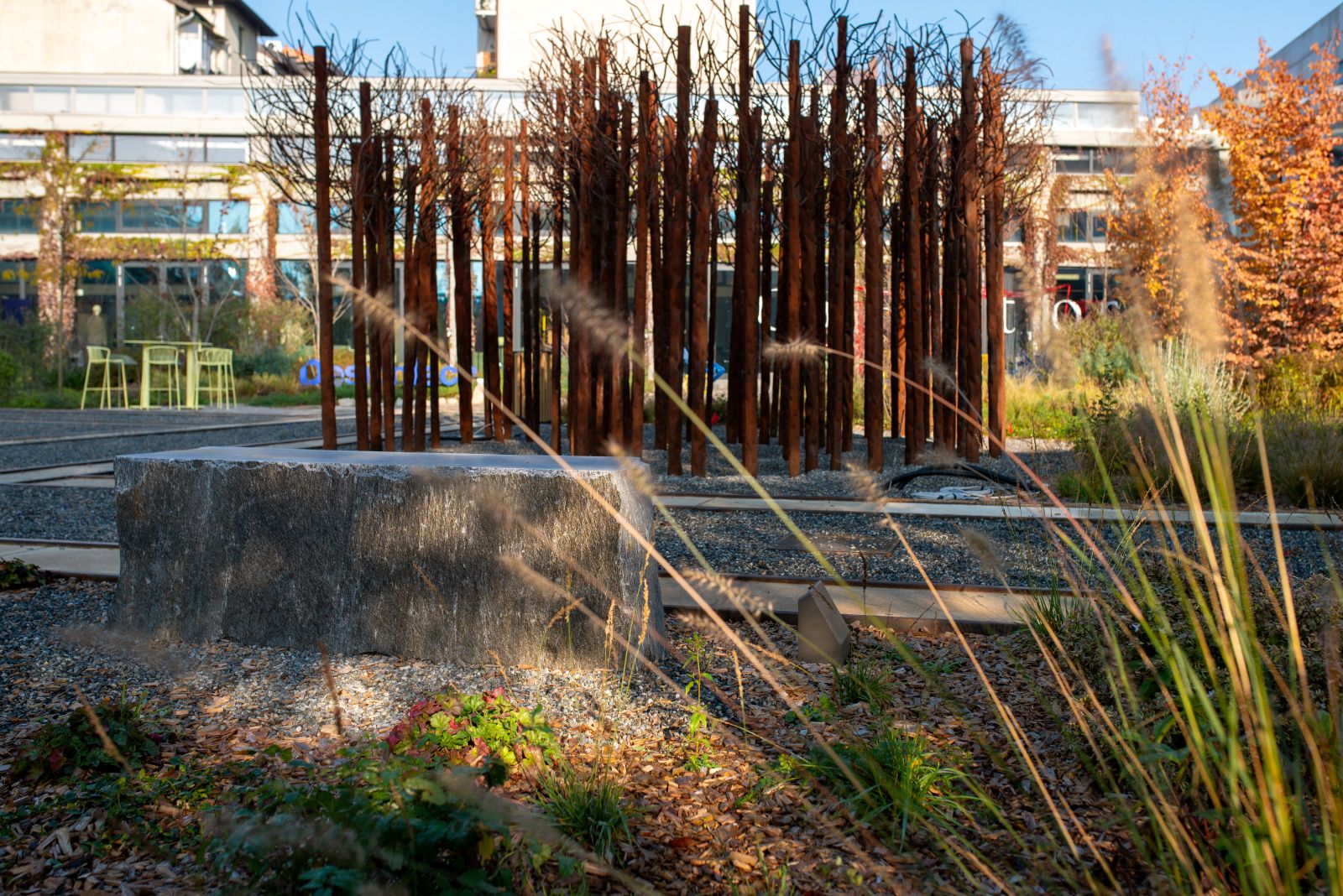
The project, launched in May 2024 and completed in summer 2025, covers a plot of approximately 1,600 sqm and transforms a former paved area into over 800 square meters of new green surfaces. The new courtyard connects three buildings: Co-Factory—already active – a club nearing completion, and a bistrot located in a building soon to be renovated, becoming their natural extension and a new meeting point for the neighborhood.
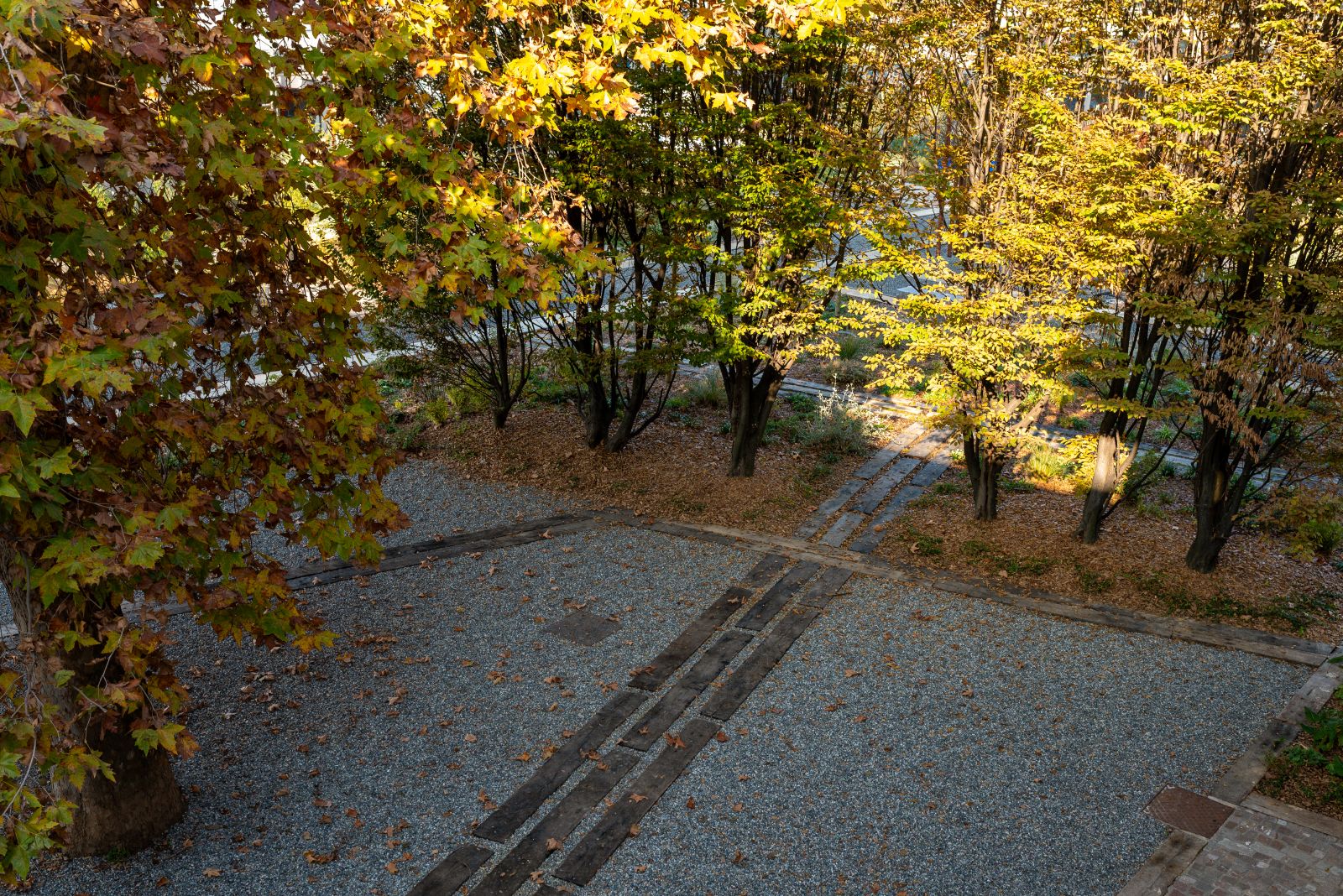
The landscape design regenerates the site’s identity by drawing from its industrial past. The contemporary landscape was achieved through depaving and the reuse of original materials. These materials include porphyry cubes and concrete pavers recovered from the adjacent lot, restored railway sleepers used as edging and pathways, and gravel and steel surfaces, all evoking the working-class heritage of the area.
Greenery here becomes vital infrastructure—not mere decoration, but an active element contributing to environmental and social wellbeing. The courtyard integrates climate-adaptation strategies, featuring rain garden zones that promote natural rainwater drainage and help mitigate the urban microclimate.

Margherita Brianza, founder of Parcnouveau, explained, “We wanted to restore a more human dimension to this place, bringing its story to the surface through materials and landscape”. She added that they aimed to “reveal the industrial memory of the district while creating a new landscape of relationships—permeable, ecological, and inclusive”.
The courtyard is conceived as an extension of public space, accessible to the neighborhood during the day and enlivened in the evening by the venues that face it. This project aligns with RealStep’s vision, which starts from disused industrial heritage, and strengthens the local ecosystem.
