Pierattelli Architetture is behind the full restyling of Casa A, a 130 sqm apartment, inside the prestigious Palazzo Stefanelli, a 19th-century architectural gem located in Borgo Pinti, one of the main streets of Florence’s historic centre. This intervention is part of the broader regeneration of Palazzo Stefanelli, which the studio initiated through the restoration of the entire structure, converting the building into twelve residential units. The renovation was carried out with deep respect for the existing architecture, enhancing decorated ceilings and historic geometries while integrating contemporary living solutions focused on comfort and sustainability, including next-generation home automation systems.
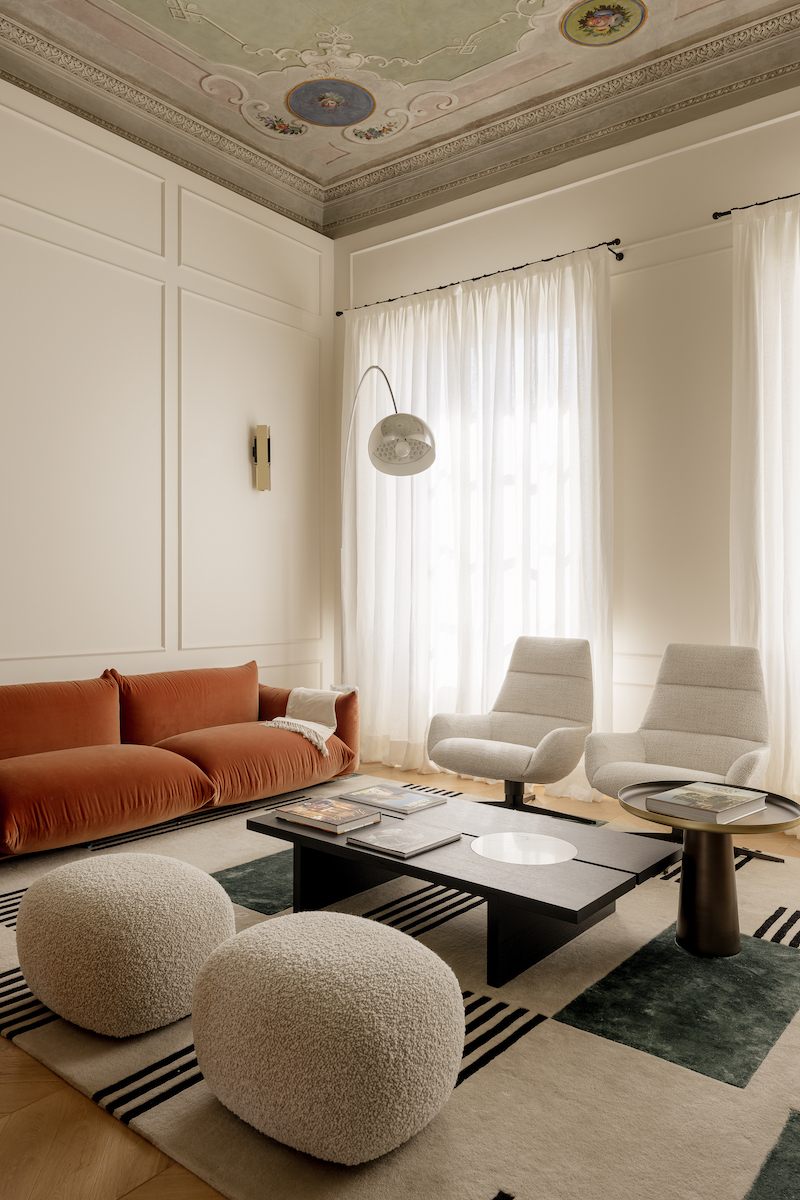
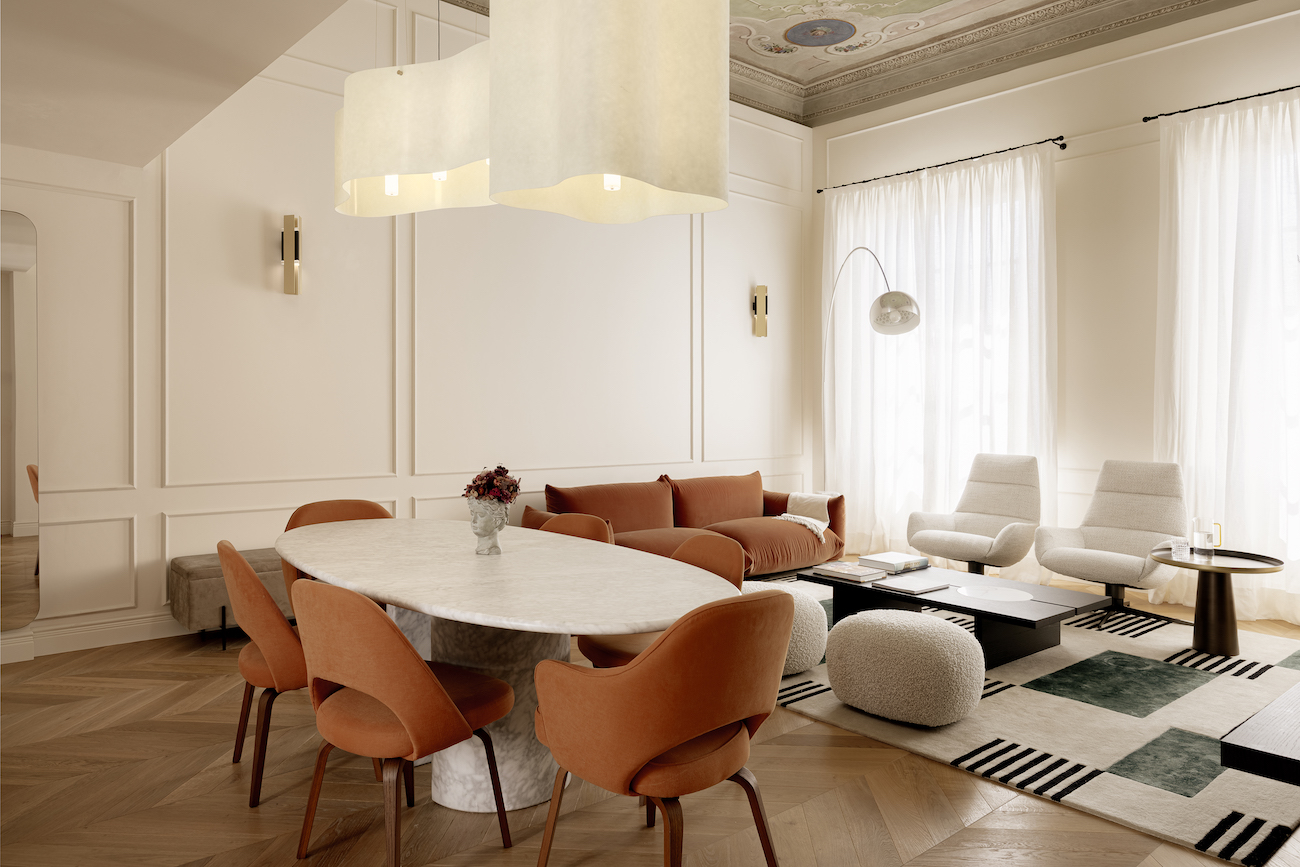
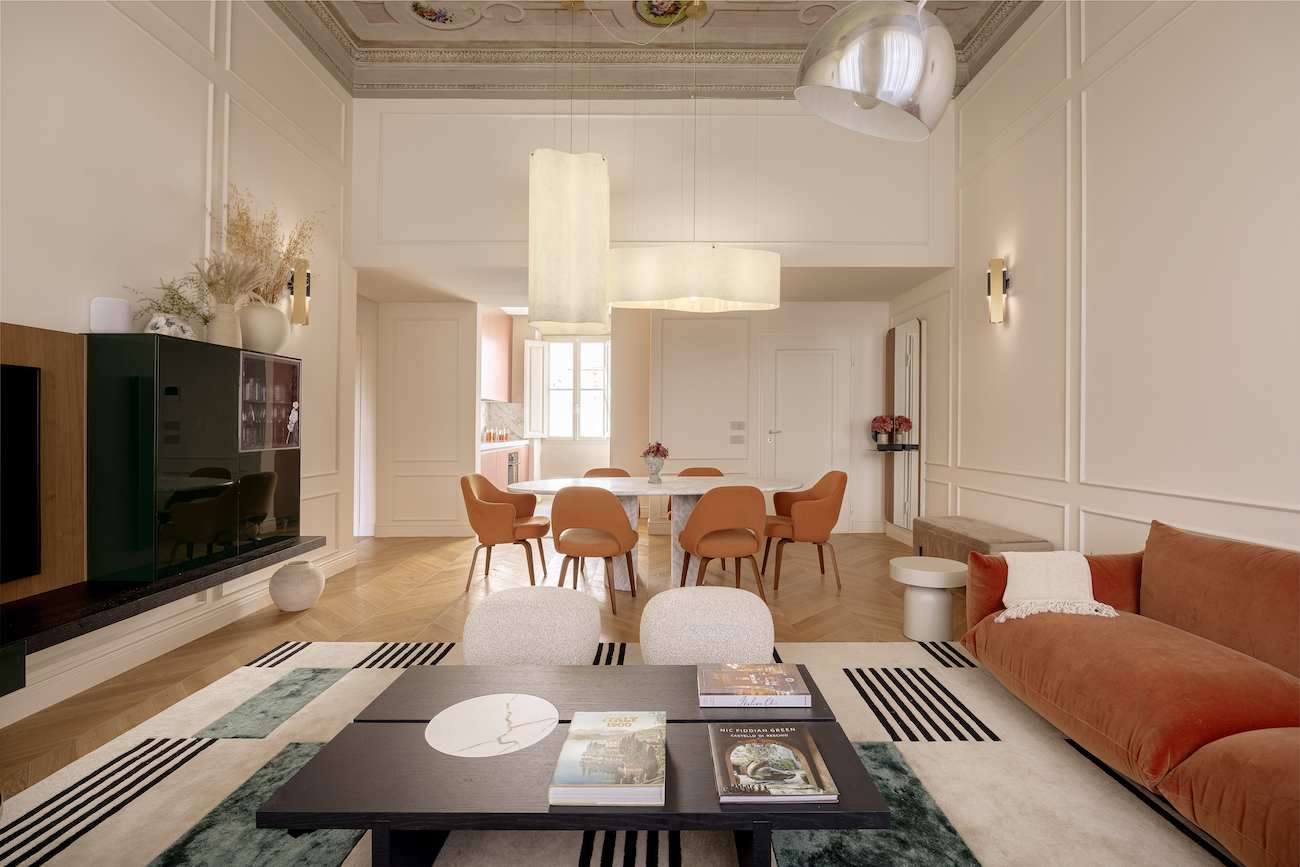
The Casa A project is a perfect example of how architectural heritage and contemporary design can find an effortless balance. The apartment is organized around a luminous living area, where the magnificent period frescoed ceilings—authentic decorative masterpieces with geometric and floral motifs—become the focal point of the rooms. The studio’s approach preserves and elevates the character of the historic architecture by enhancing these details and harmoniously blending them with contemporary design furnishings.
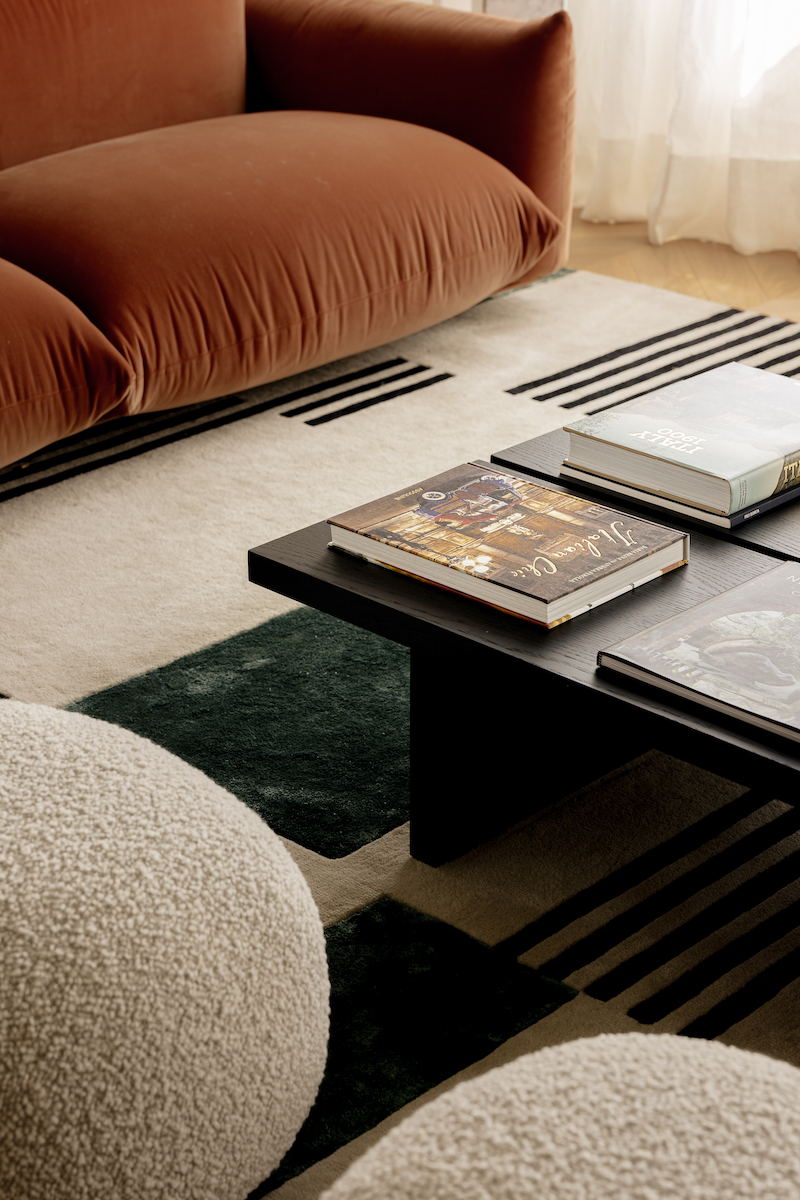
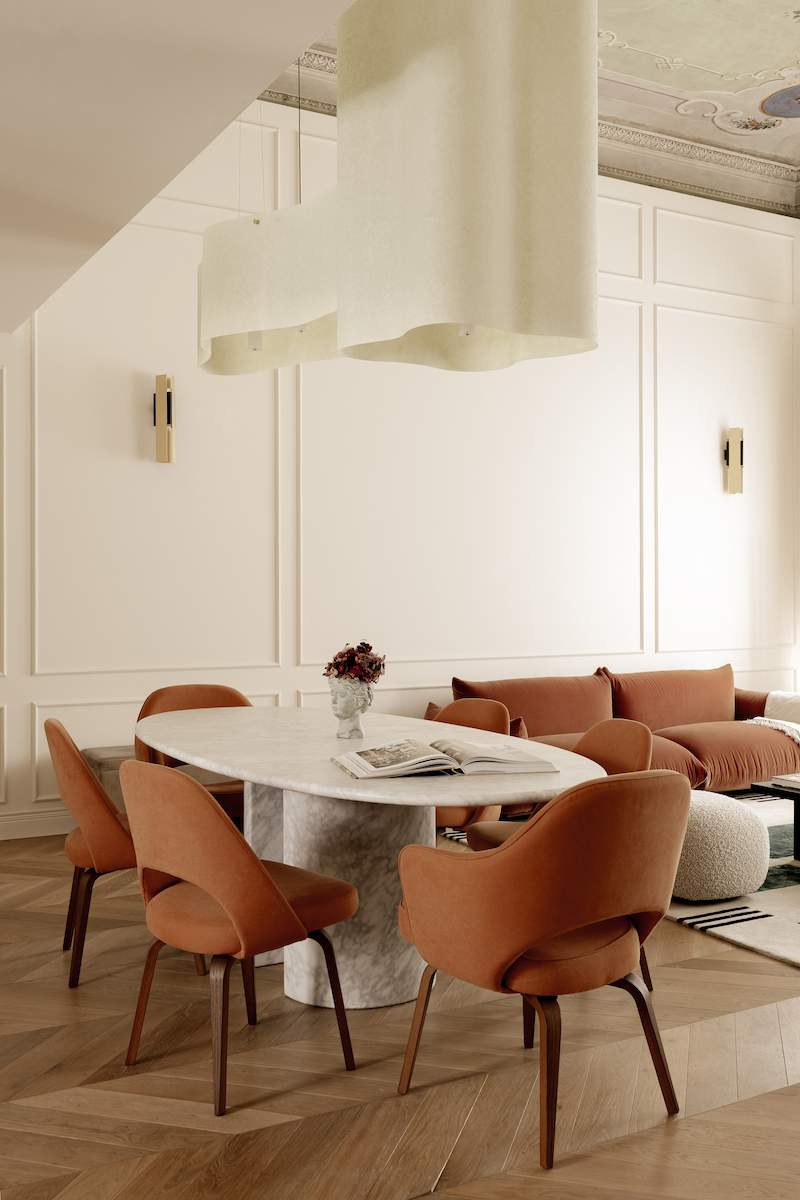
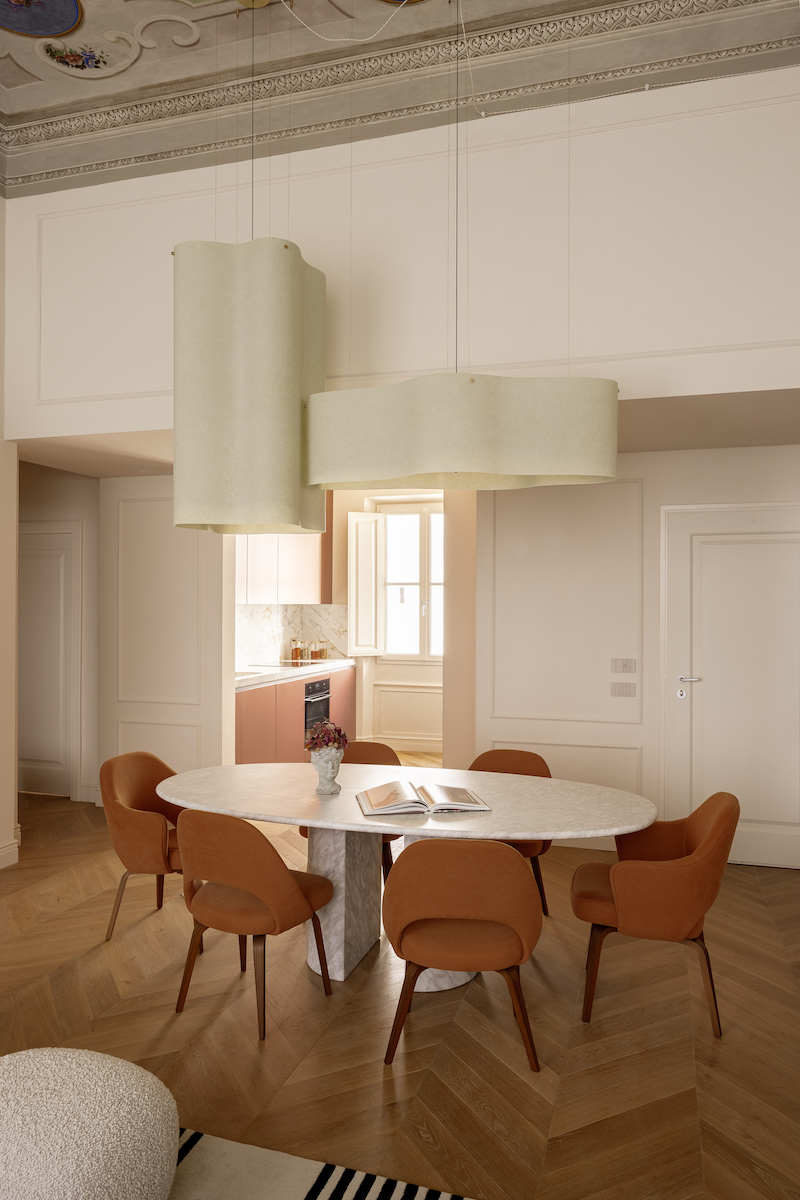
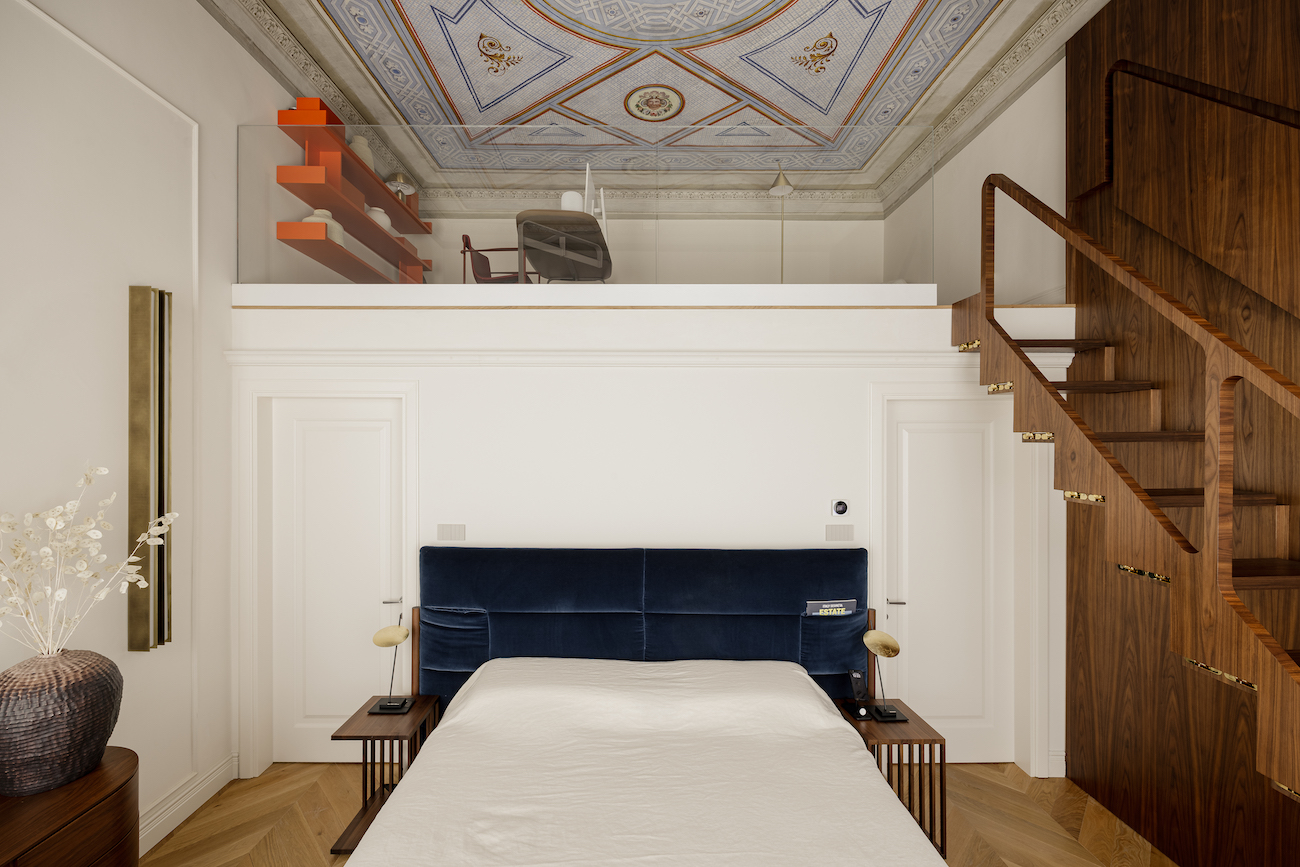
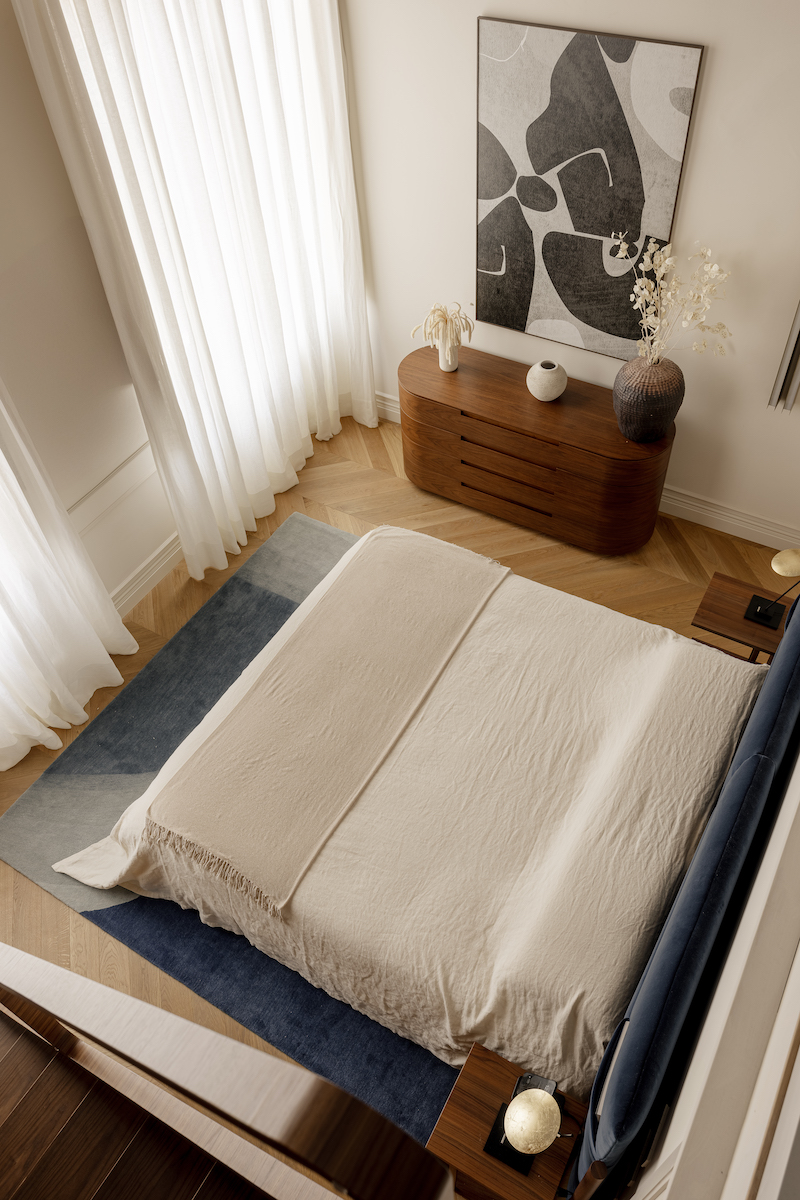
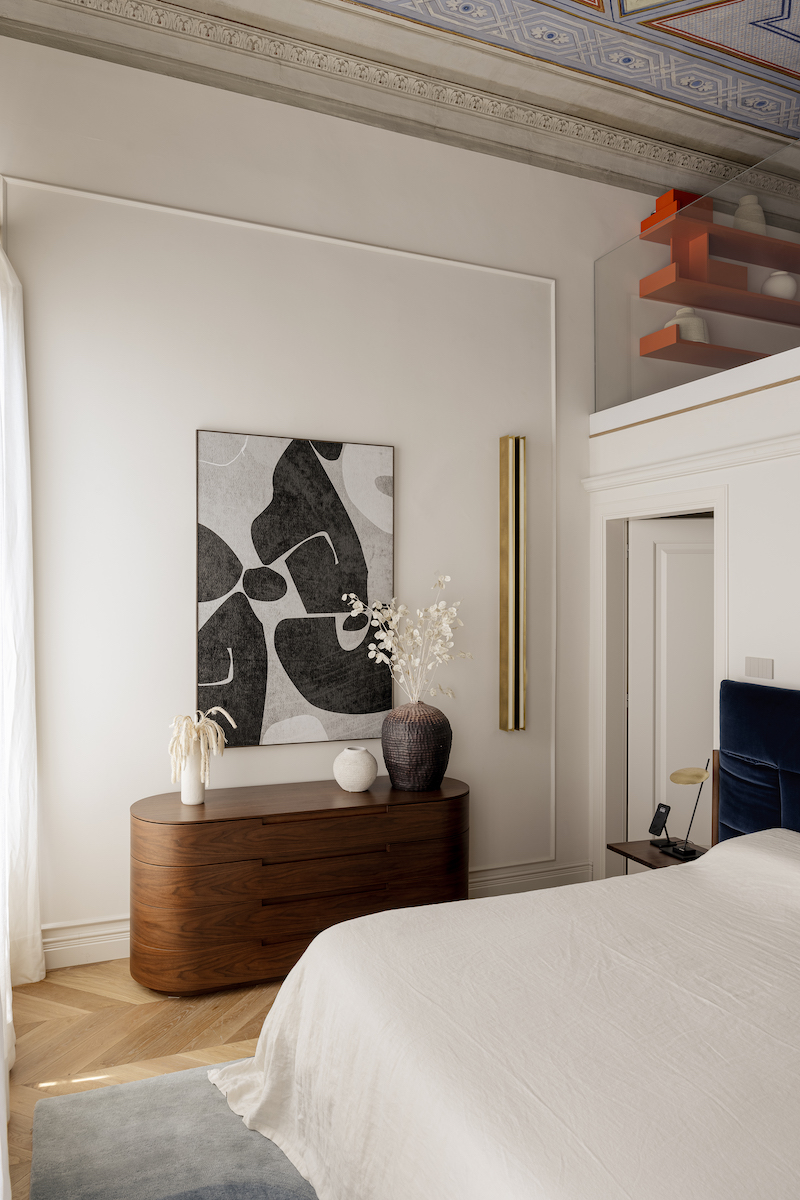
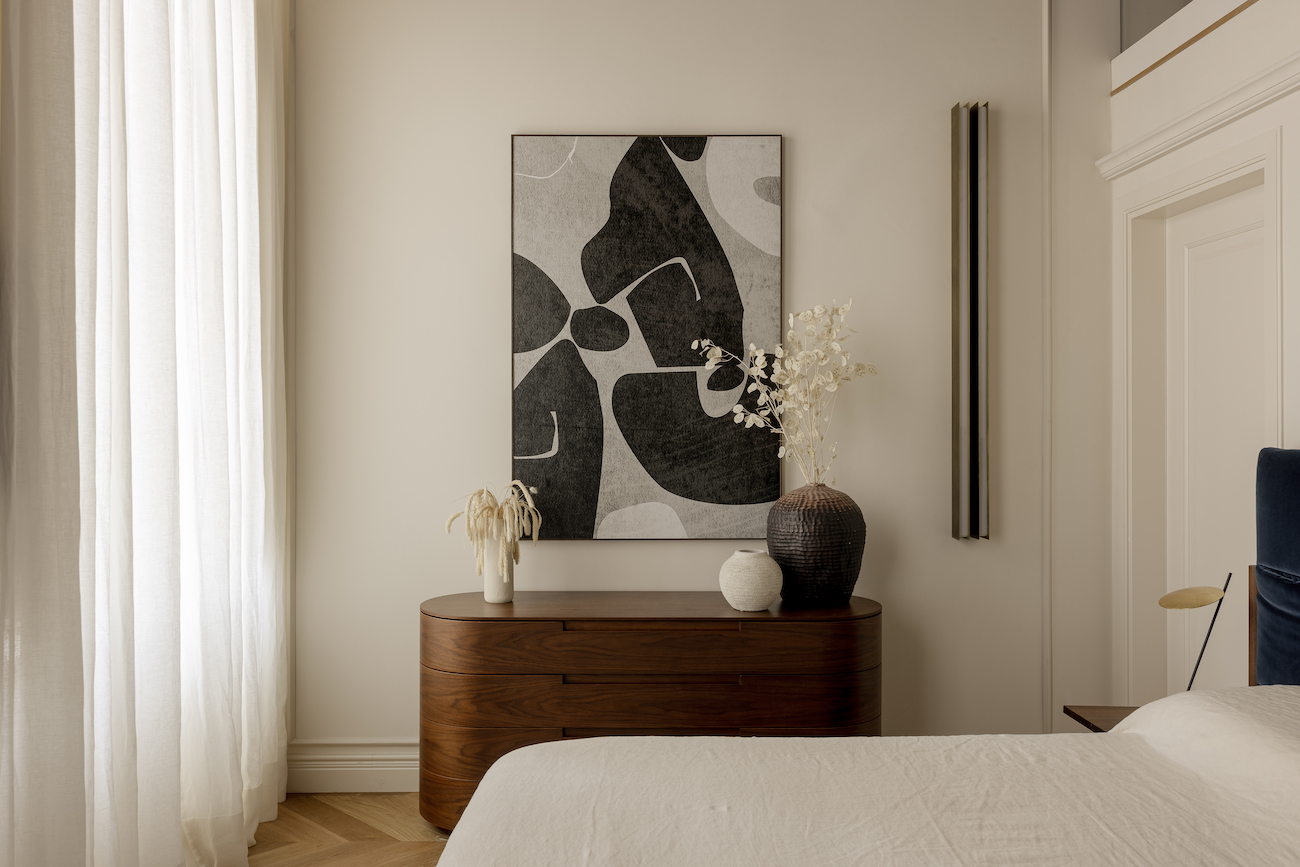
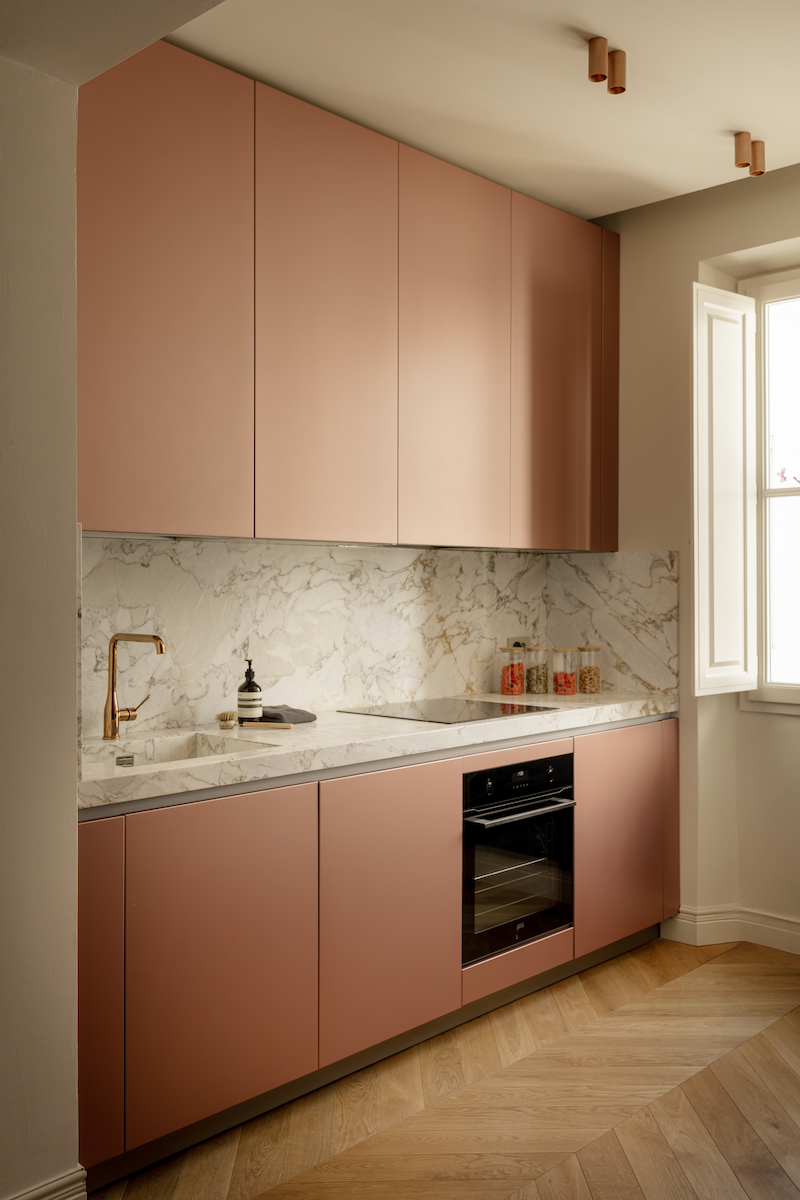
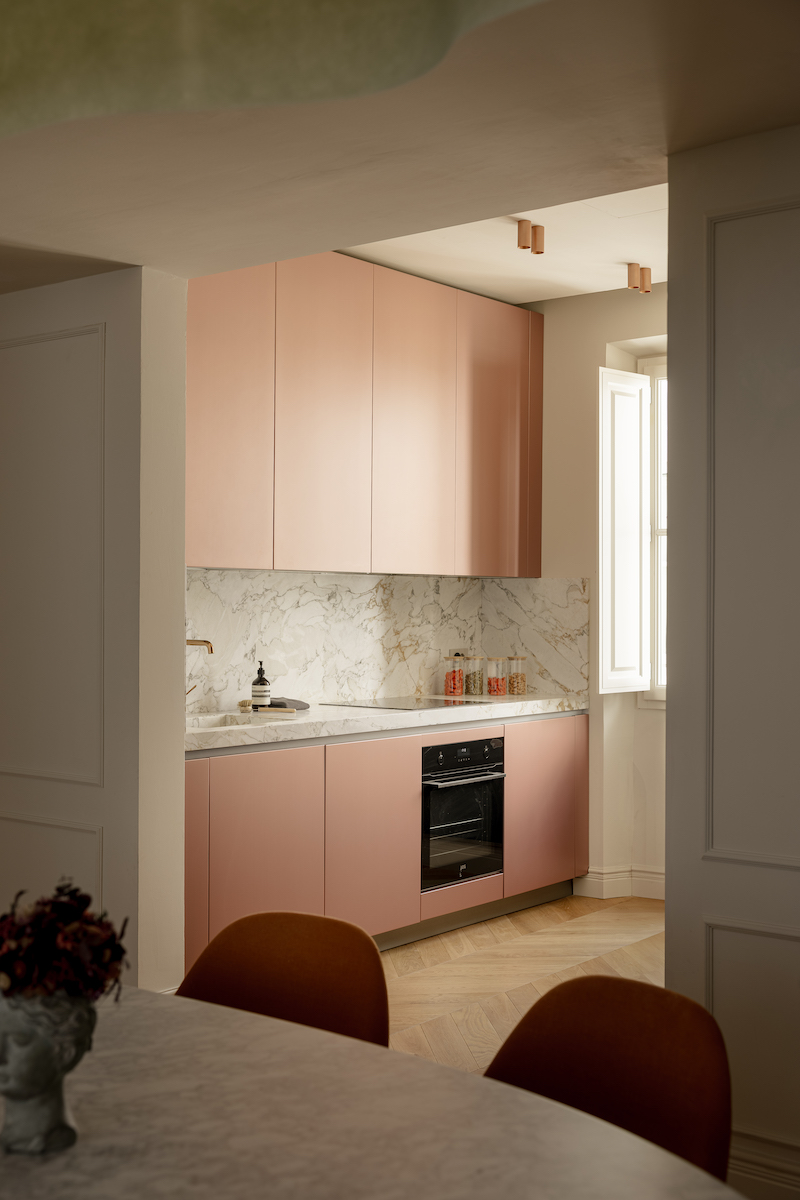
In the living room, a marble Cappellini table interacts with the timeless lines of Knoll’s Saarinen Executive Chairs, while the rust-coloured velvet Marenco sofa by Arflex introduces warmth and softness. The custom-designed kitchen, manufactured by Elmar, features metallic pink lacquer in dialogue with the neutral tones of the walls. In the bedroom, Cassina’s Biombo bed in midnight-blue velvet takes centre stage.
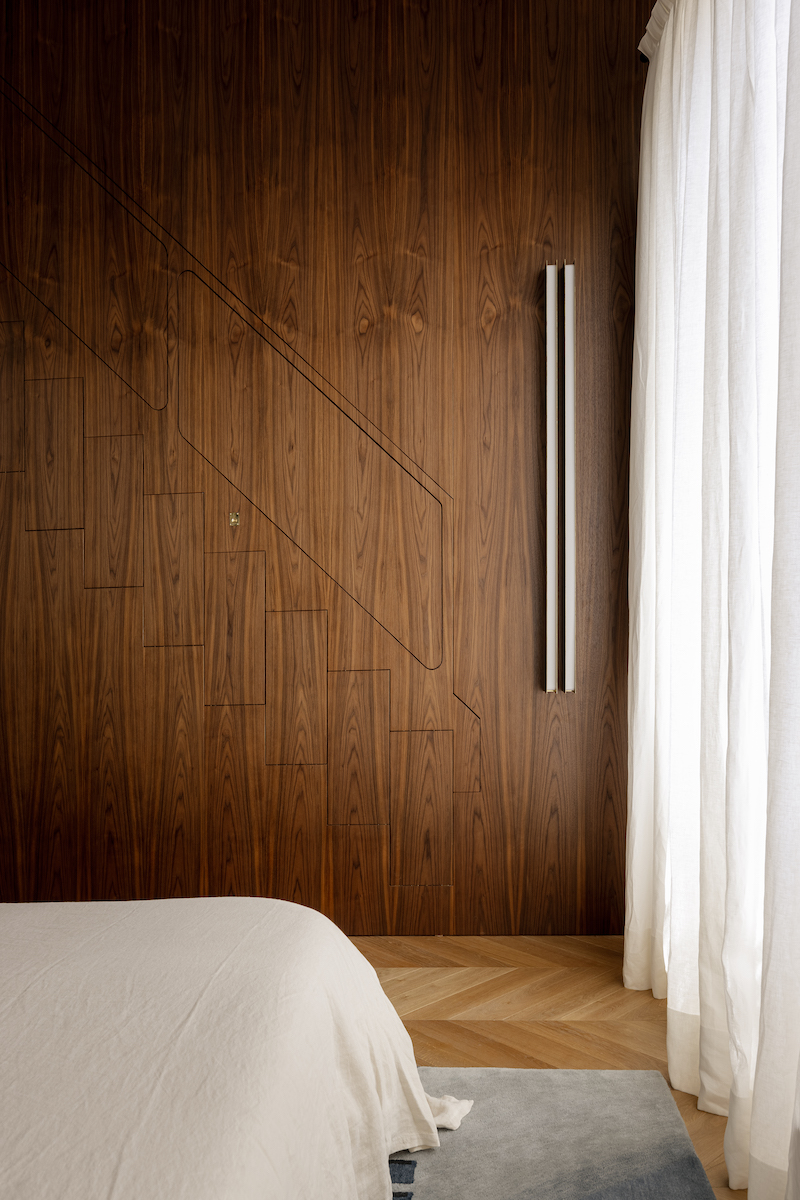
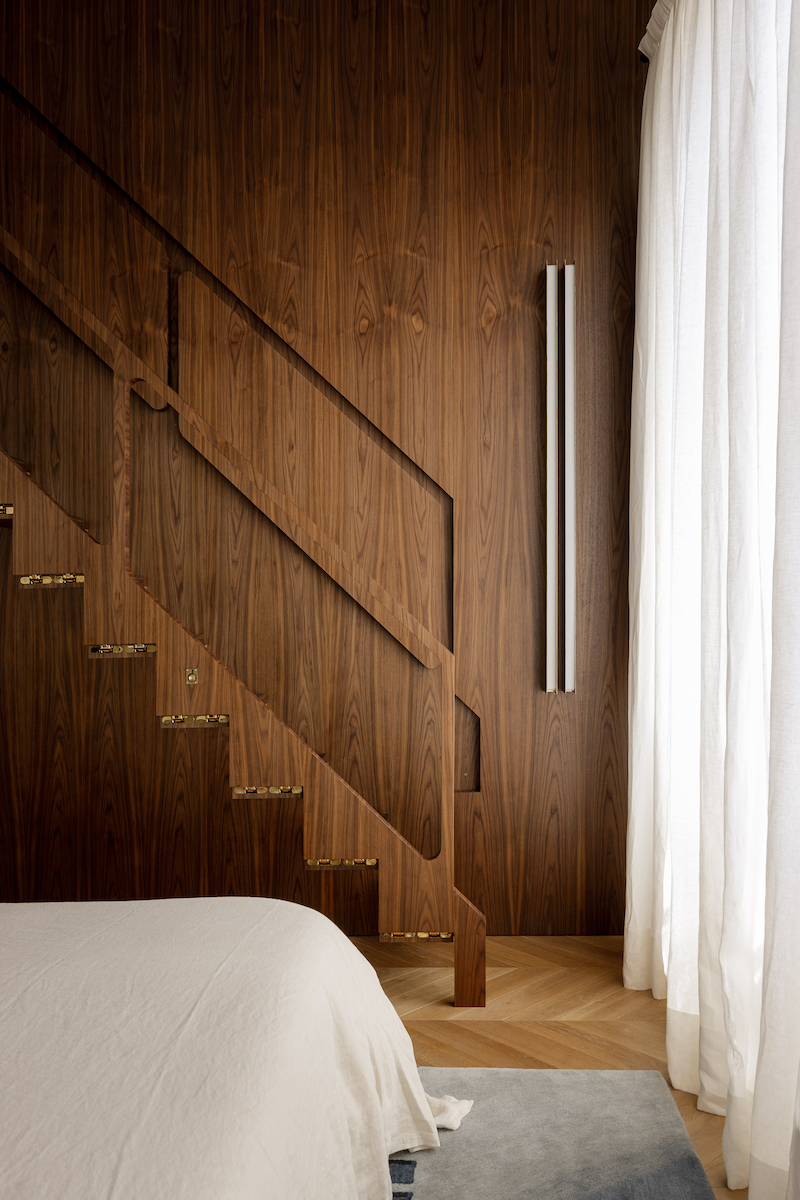
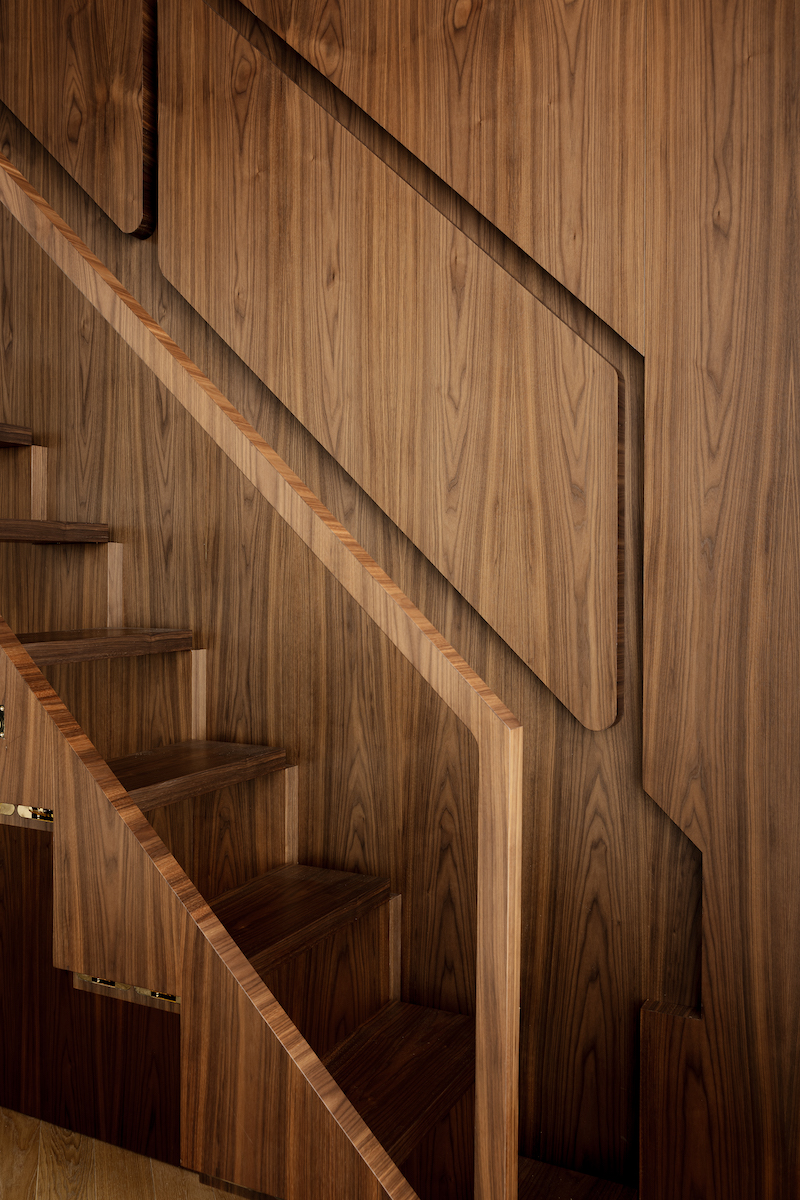
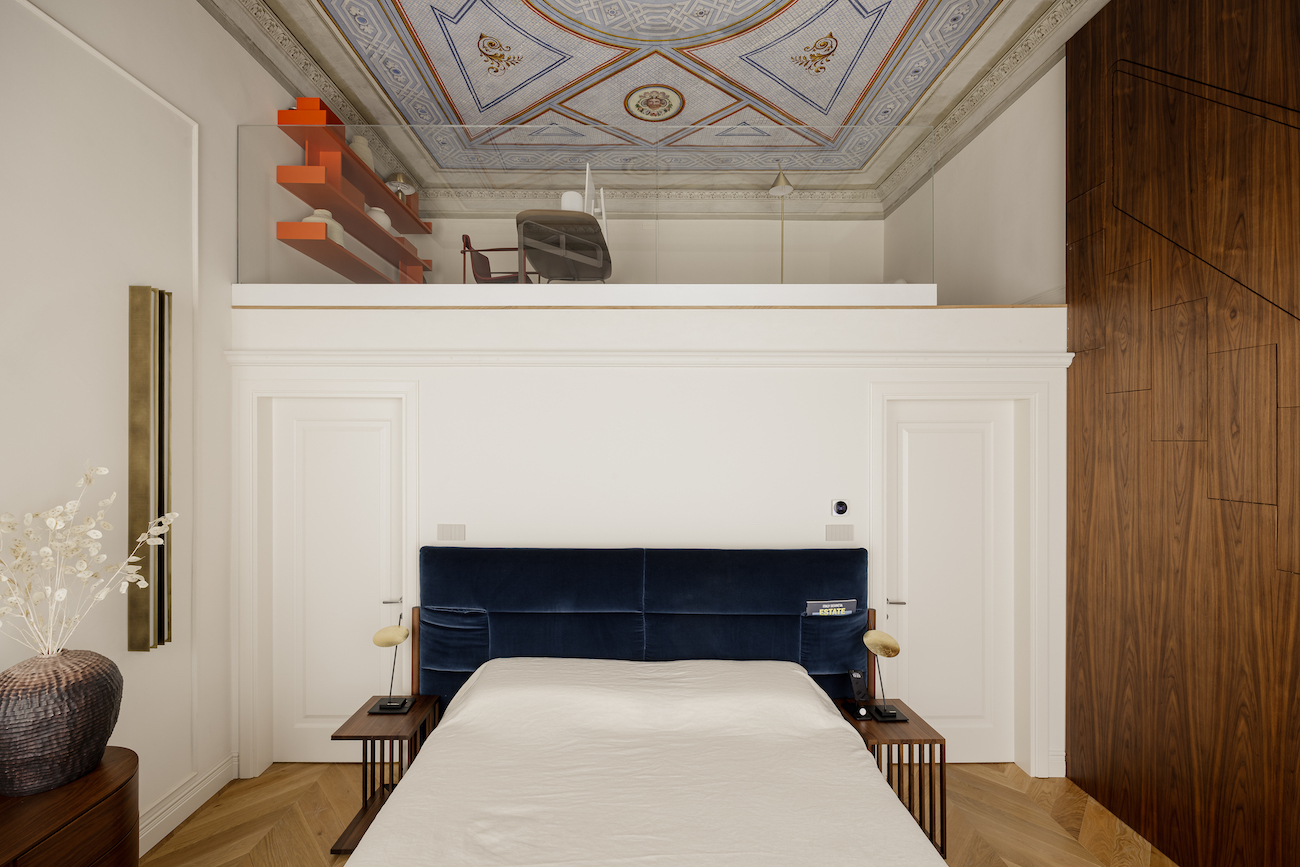
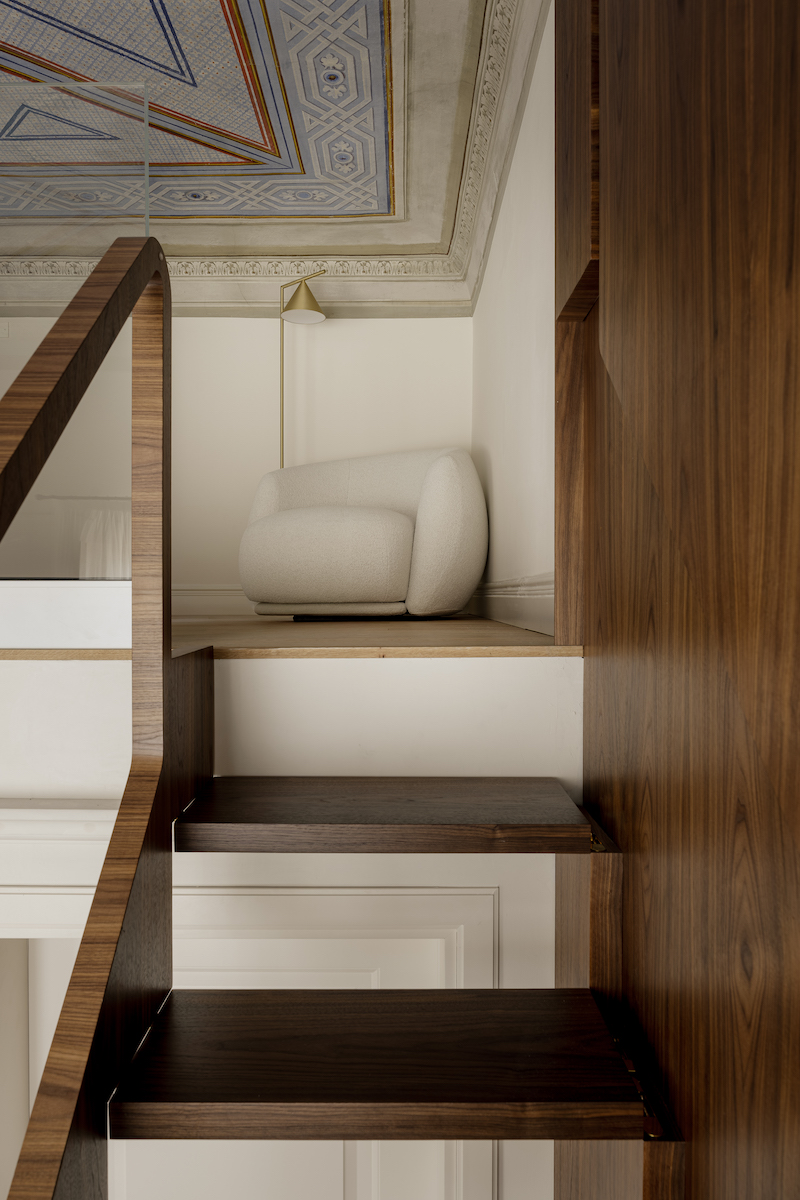
The most distinctive and surprising element of the restyling is undoubtedly the wooden staircase that appears to “disappear” into the bedroom wall. Based on an original Pierattelli Architetture design, the structure features seemingly suspended steps and incorporates an invisible mechanism that allows it to rotate 90° to access a loft-study.
As Claudio Pierattelli explains, this approach reflects the studio’s philosophy: “it is not about placing the contemporary over the ancient but about creating a respectful and harmonious dialogue that enhances both”. He adds that the disappearing staircase perfectly embodies this approach, serving as “a technically advanced solution that honours the historic character of its setting“. Casa A confirms how contemporary architecture can enhance historical heritage and create spaces that look to the future without losing sight of their roots.