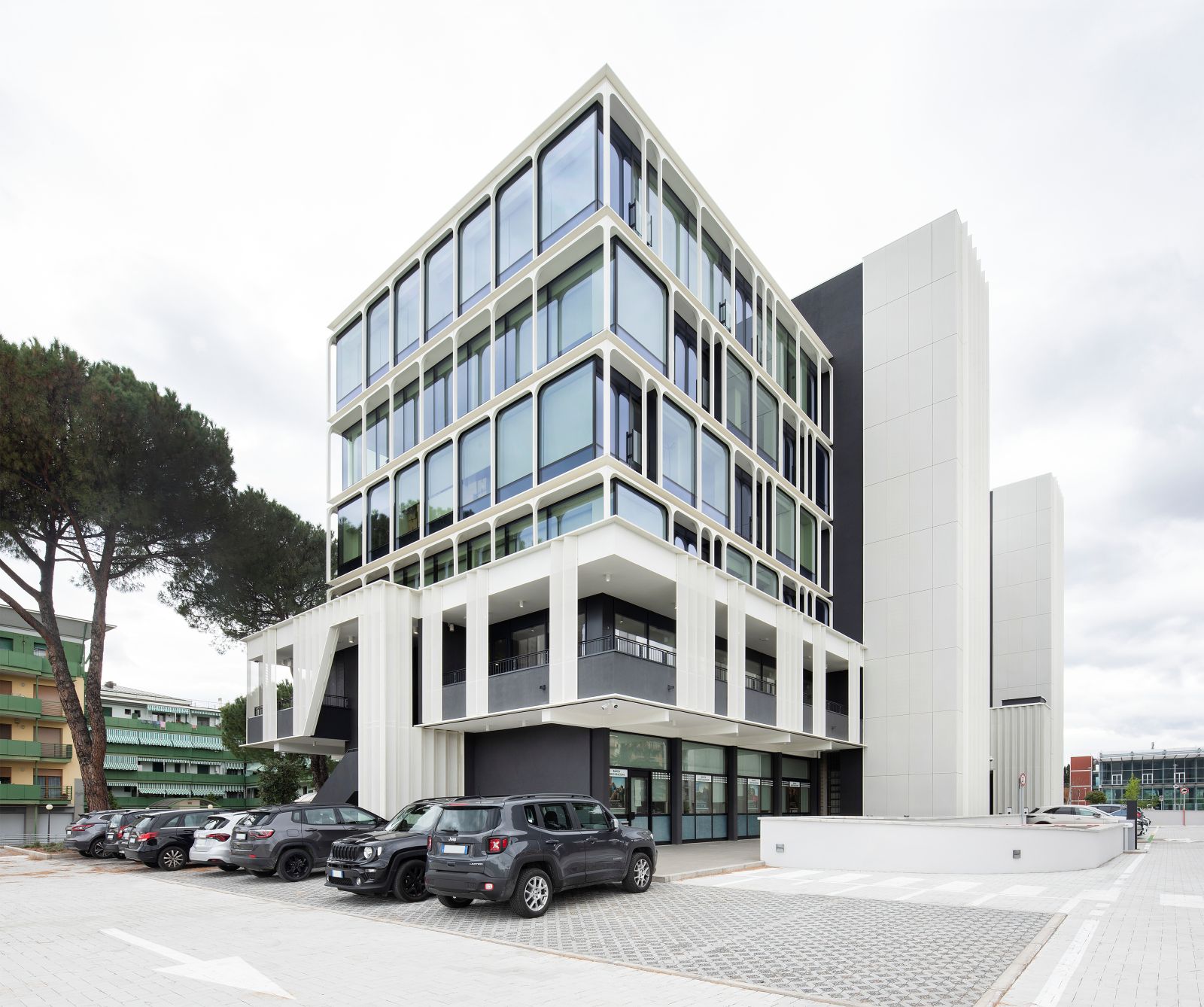
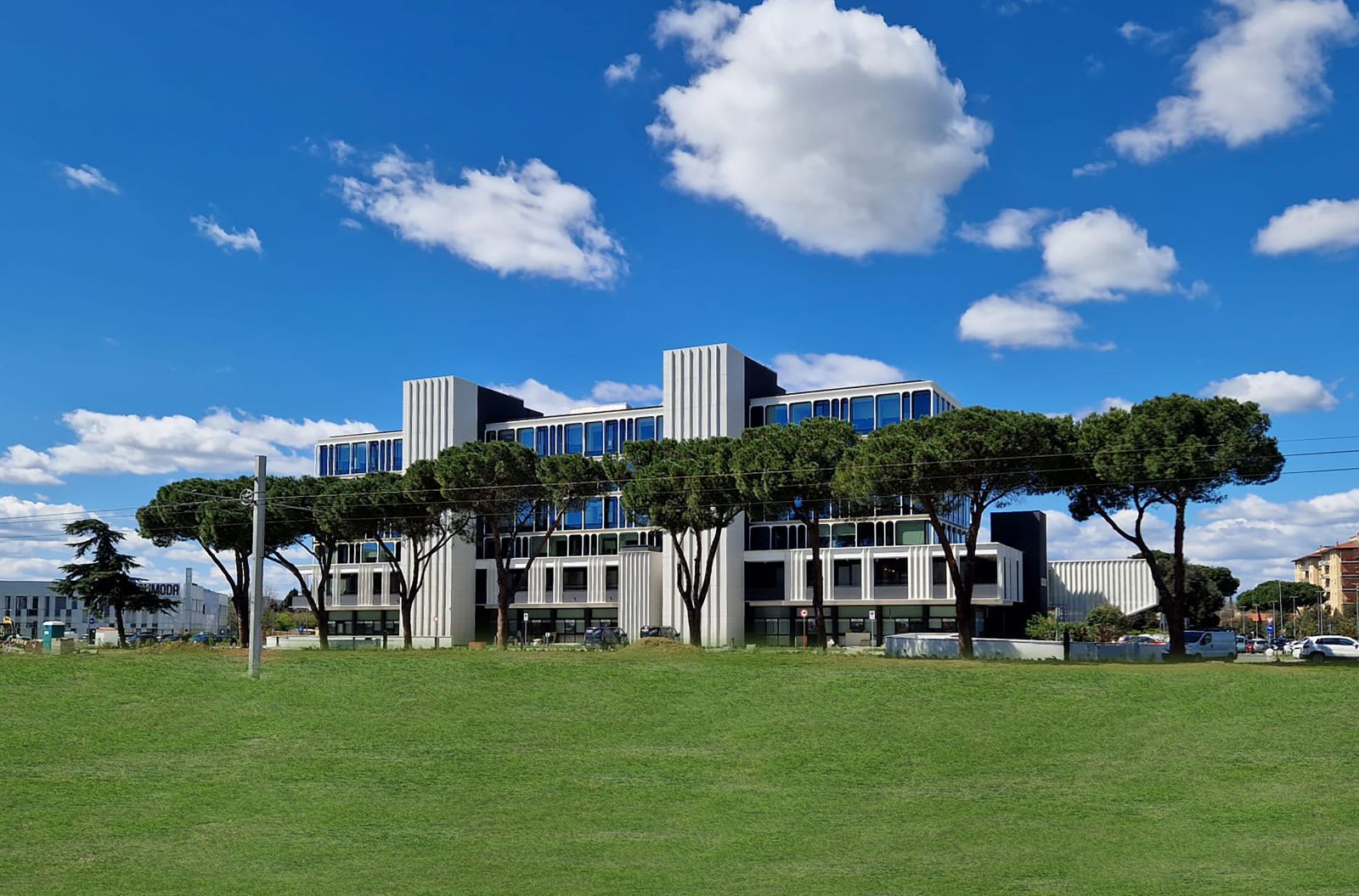
The office building PANTIN 1 in Scandicci (FI), located at via Pantin 1, a single block constructed in the 1970s and developed over five levels, has undergone an ambitious renovation and requalification project. Curated by Barreca & La Varra for the client Bel S.p.A., the intervention took place between 2019 and 2023. The program aims for LEED Platinum certification.
The project involved the renovation of the existing building through a full strip-out, extensive structural reinforcements, regulatory upgrades, and a new façade fit-out. On the ground floor, there is an operating bank branch with direct access from the outside.
Renaissance inspiration for the new face
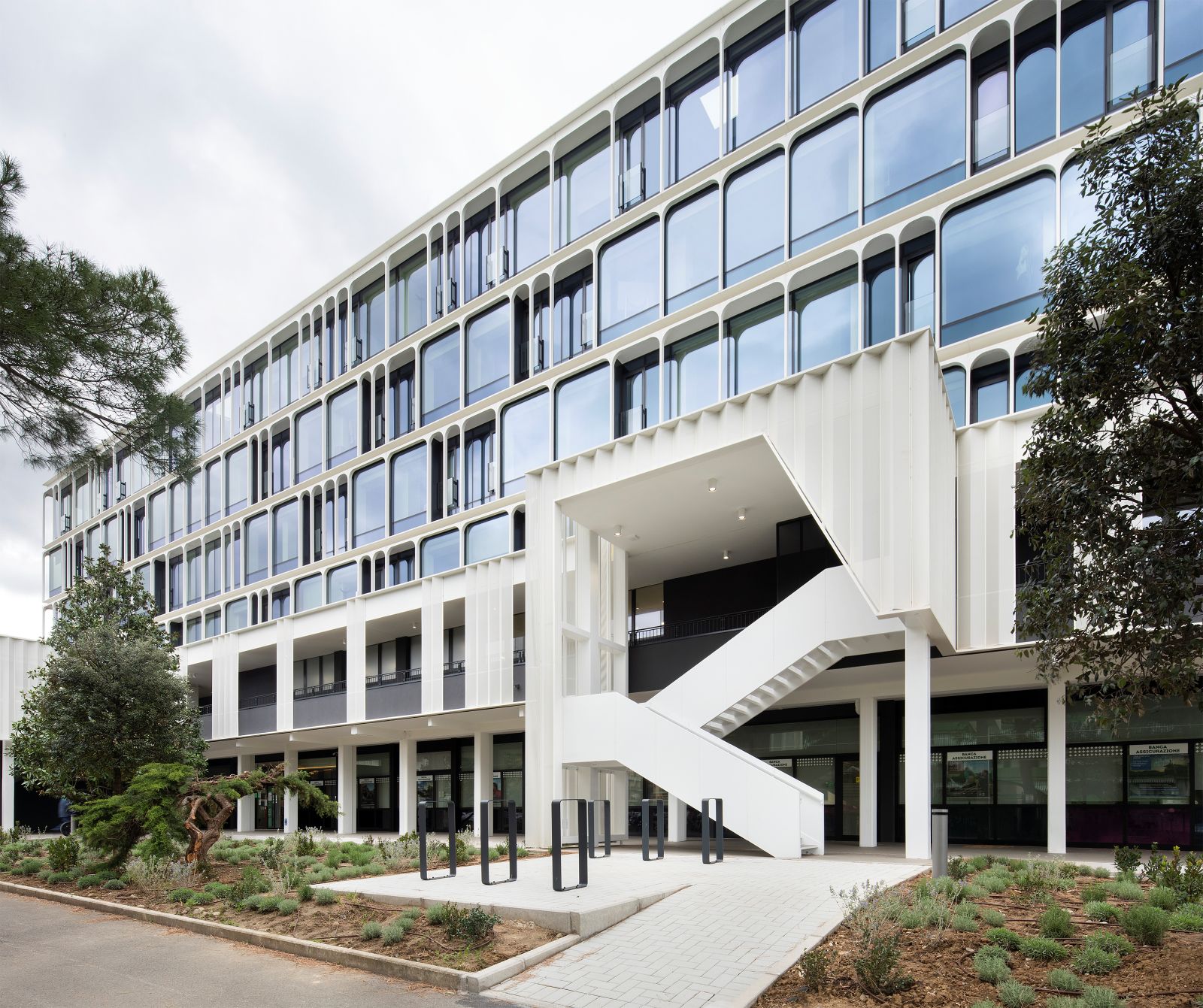
The design of the new façade is profoundly inspired by the modularity and language of Tuscan Renaissance architecture, reinterpreted in a contemporary key. Elements such as the Church of Santa Maria Novella, the Ospedale degli Innocenti, and the Vasari Corridor in Florence provided inspiration for the proportions and rhythm governing the façade. Furthermore, the pedestrian staircase accessing the offices reinterprets another historical typology, found for example in the Grand Staircase of the Municipal Square in Ferrara or in the Palazzo della Ragione in Bergamo.
The architectural language chosen by Barreca & La Varra focused on a limited palette of colors and materials, combined with an emphasis on a rhythmic alternation of shadows. The design emphasizes the existing horizontal tripartition of the building, distinguishing the different parts through the use of materials and surface treatments, without distorting the inherent characteristics of each layer.
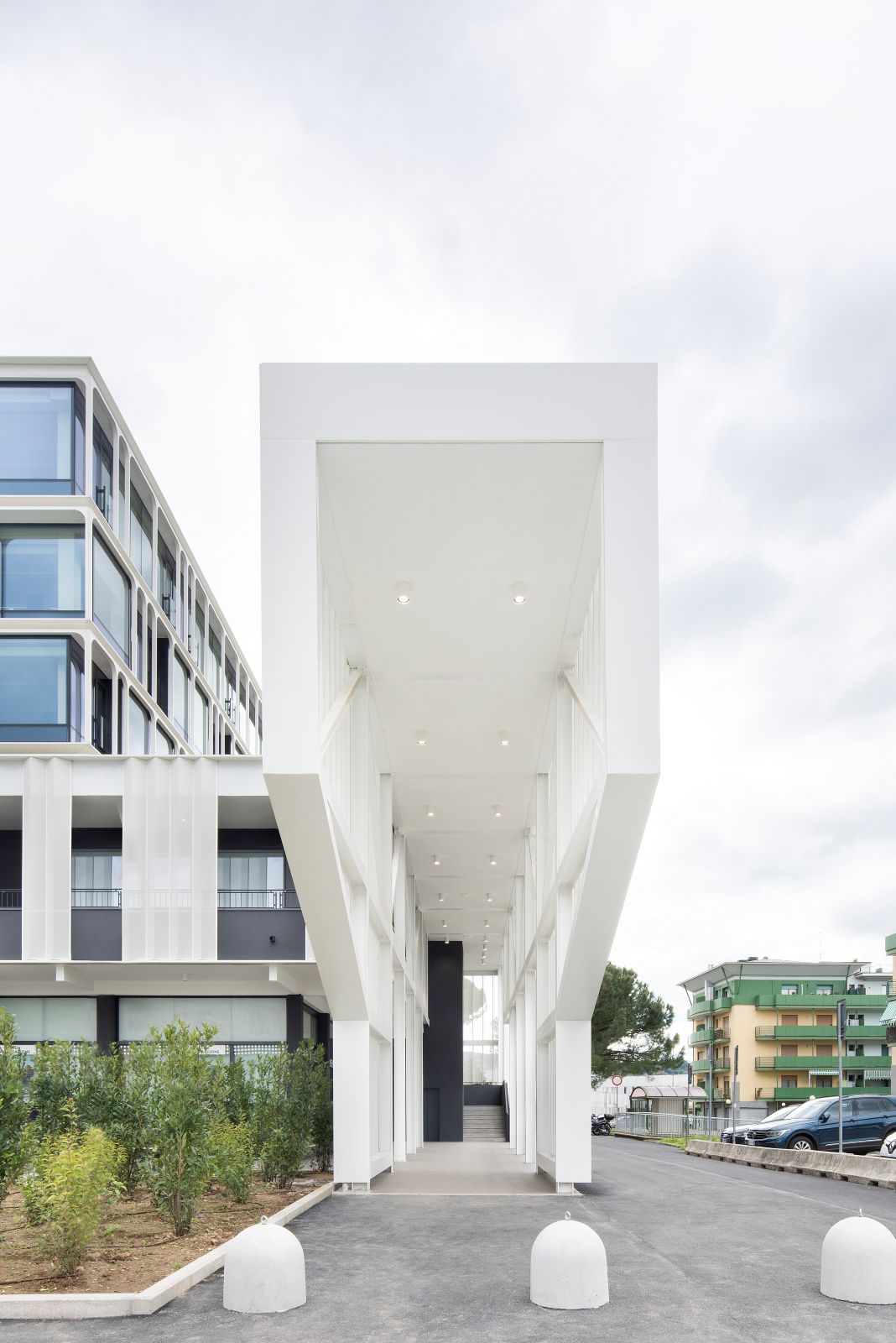
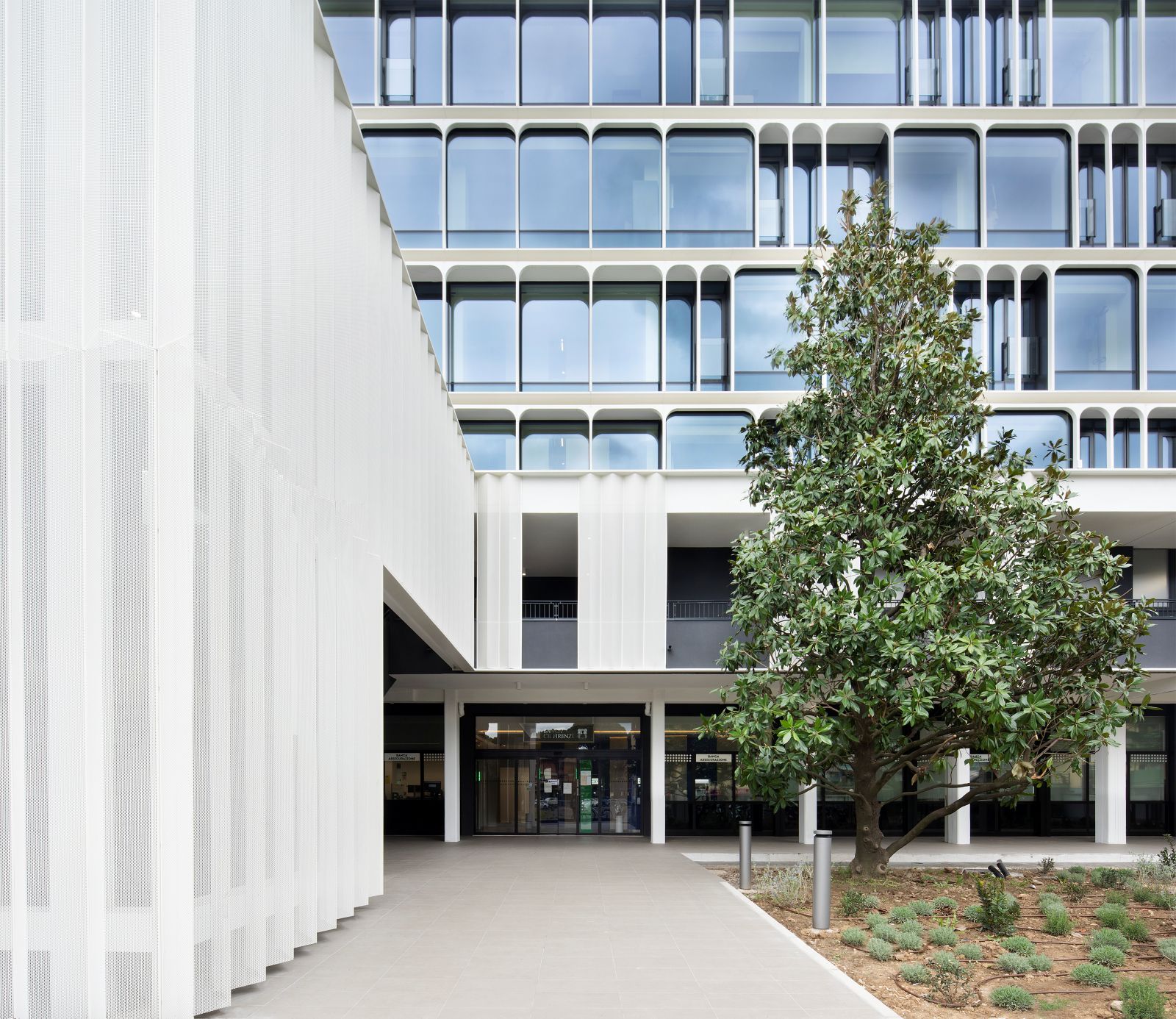
A key element of the composition is a “white ribbon,” clearly recognizable on the elevations, which folds at specific points to touch the ground floor, marking the access points to the building—where stairs and elevators are located—and visually connecting them to the upper level. A discontinuity point of this ribbon on the north façade projects outward from the building’s profile, generating a canopy that signals the main entrance.
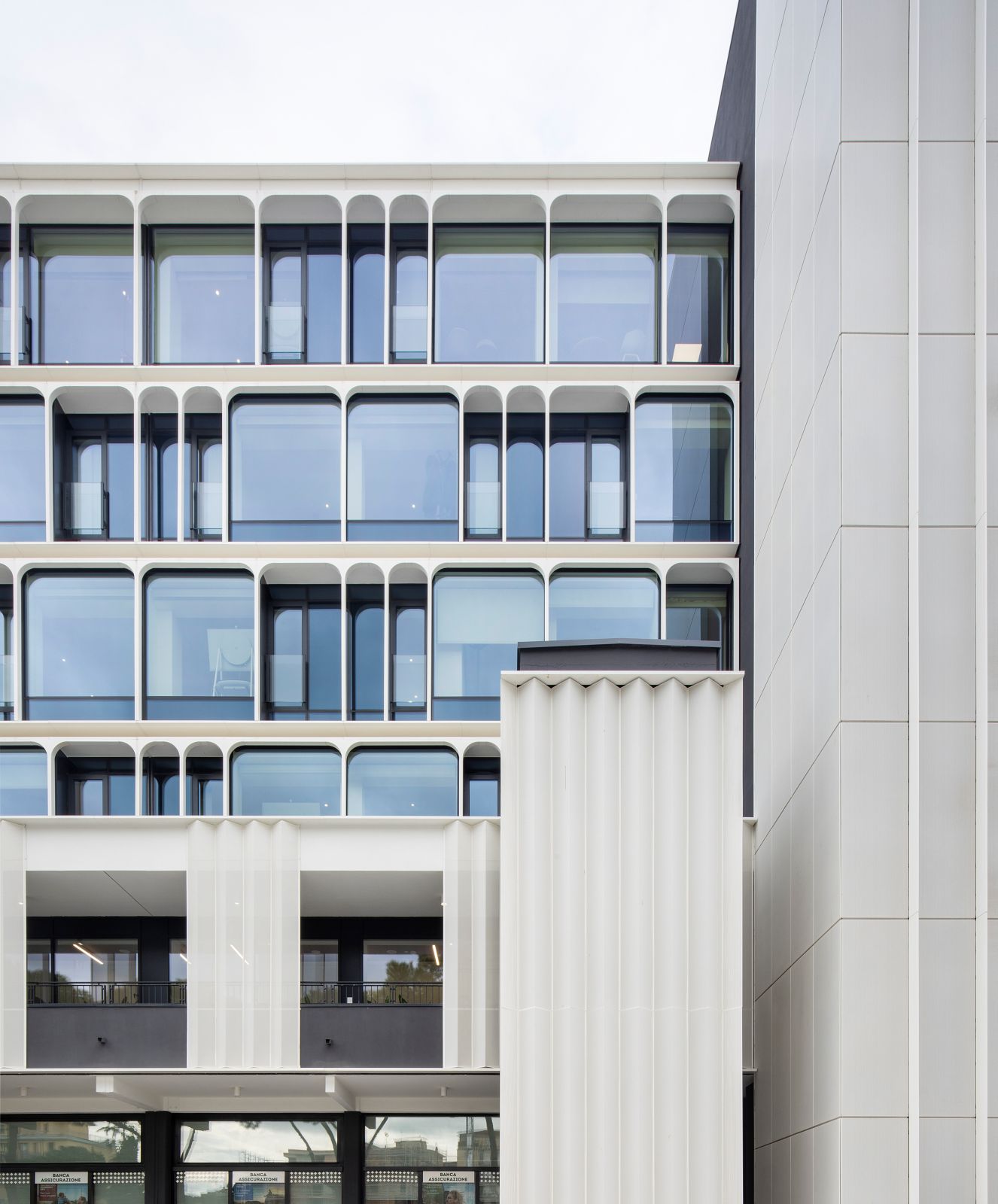
The ground floor remains rhythmically organized by the shopfront windows, which are characterized by a dark color. The first floor intentionally highlights a strong contrast with the level below by discontinuously infilling the space between floor slabs with vertically folded, micro-perforated metal sheets, which visually bring the façade plane outward from the parapet. The light color of these sheets contrasts with the shadow of the ground level.
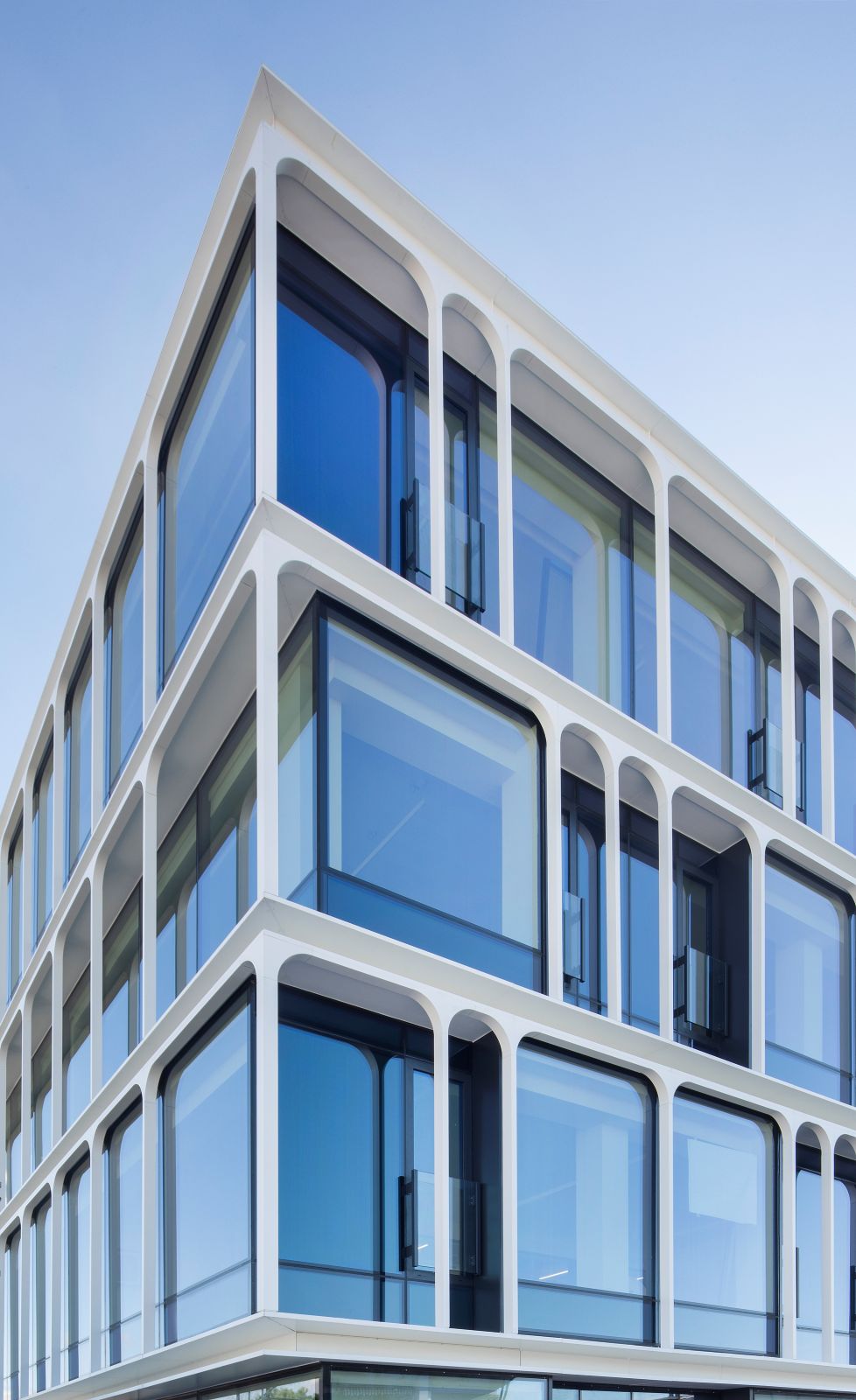
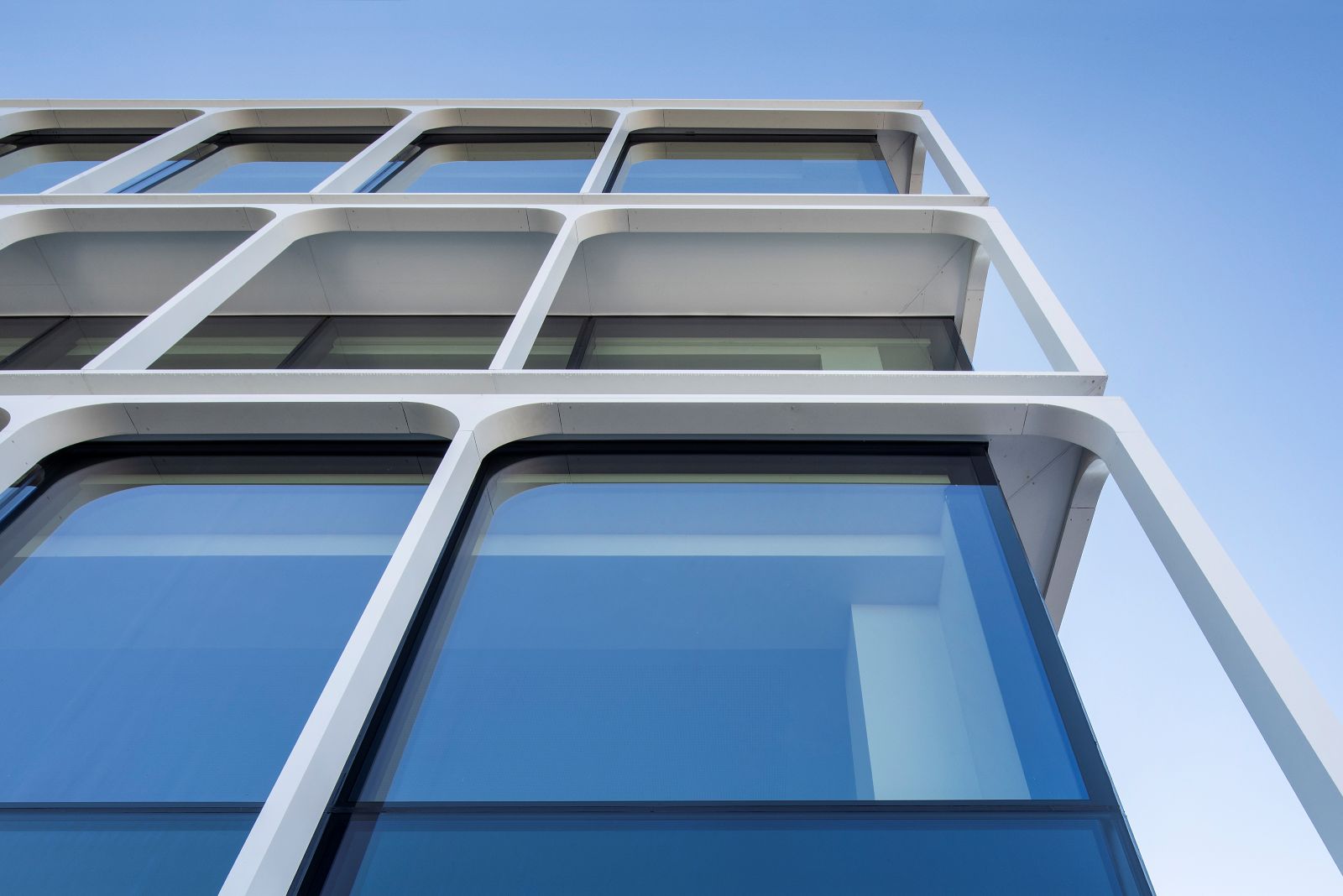
The façade of the upper floors is composed of two different planes: a glazed plane and an external system of profiles. The first consists of a continuous façade system that meets technical requirements while creating a glass veil around the existing volume. The second plane consists of a light-colored grid of thin vertical profiles, articulated by stringcourses, which redefine the proportions of the façade.
The two planes—the glazing and the profile system—together with the deep horizontal recess at the stringcourses, give the façade a new sense of depth. Within this external grid, the junction between each vertical profile and the stringcourse is softened by a slight curve, which harmonizes the elements and lends elegance to the structure, echoing the historical architectural motifs strongly present in the surrounding area.
The Executive Architectural Design, administrative procedures, and General Construction Supervision were handled by ITISTUDIO – Arch. Tobia Marcotti.