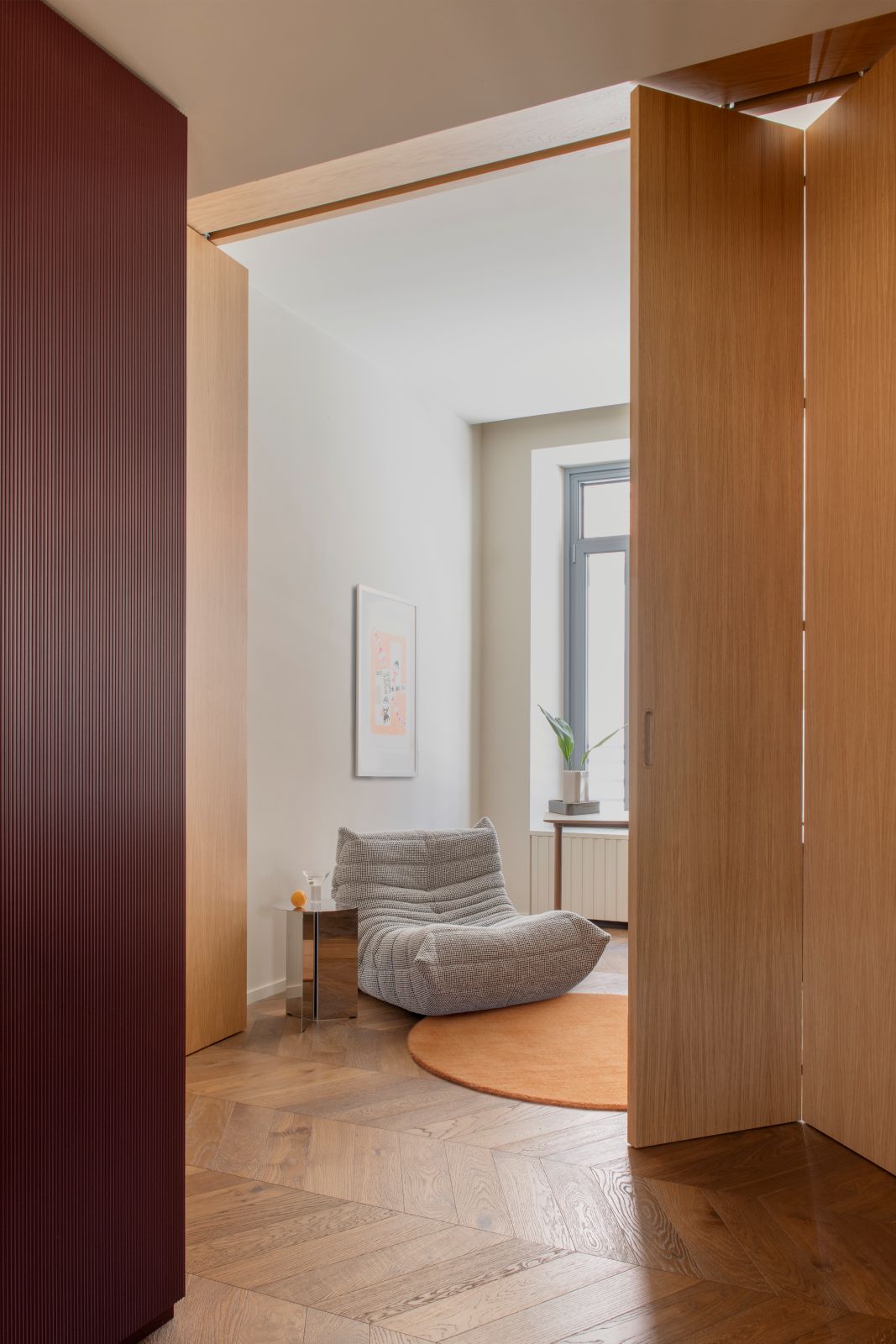
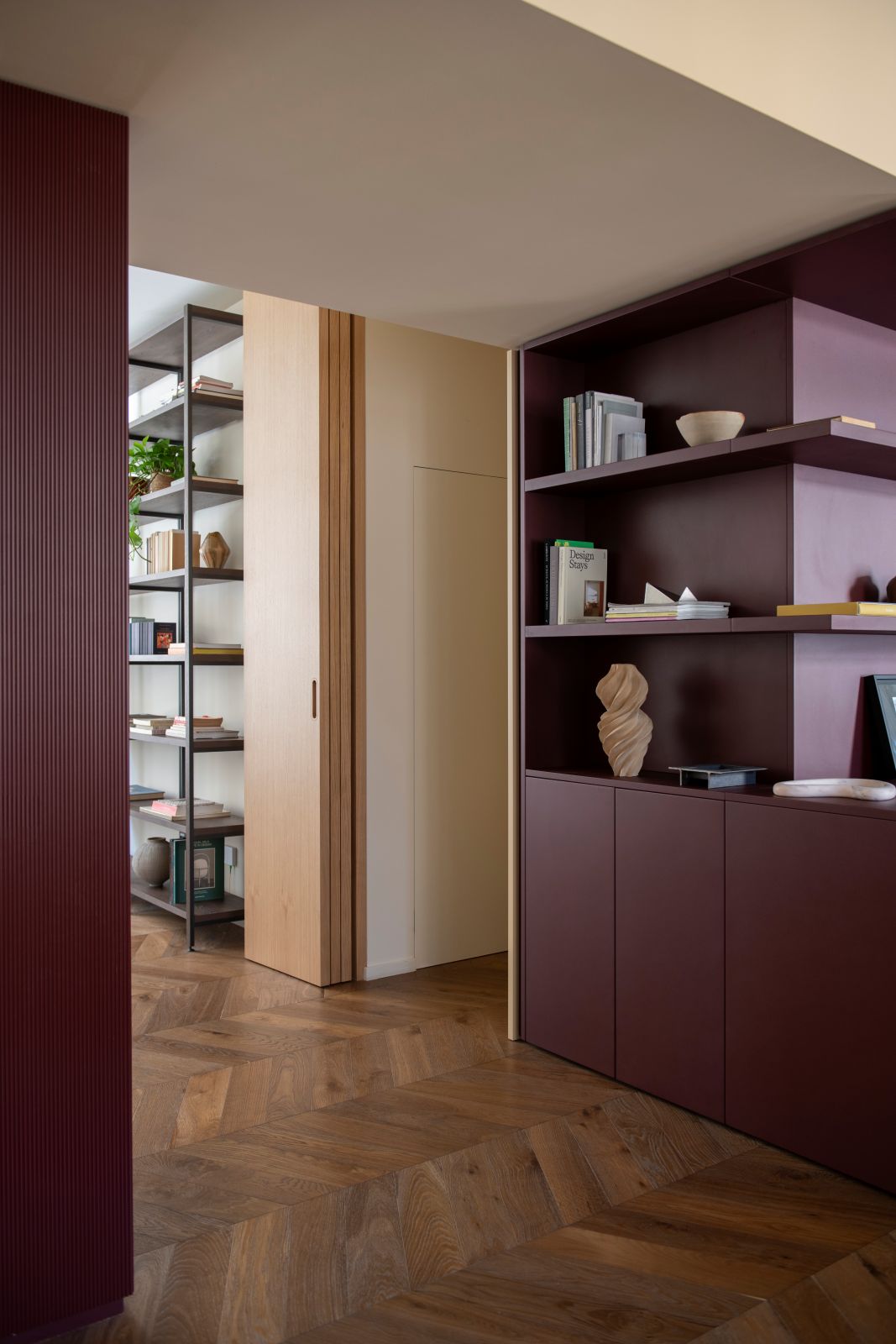
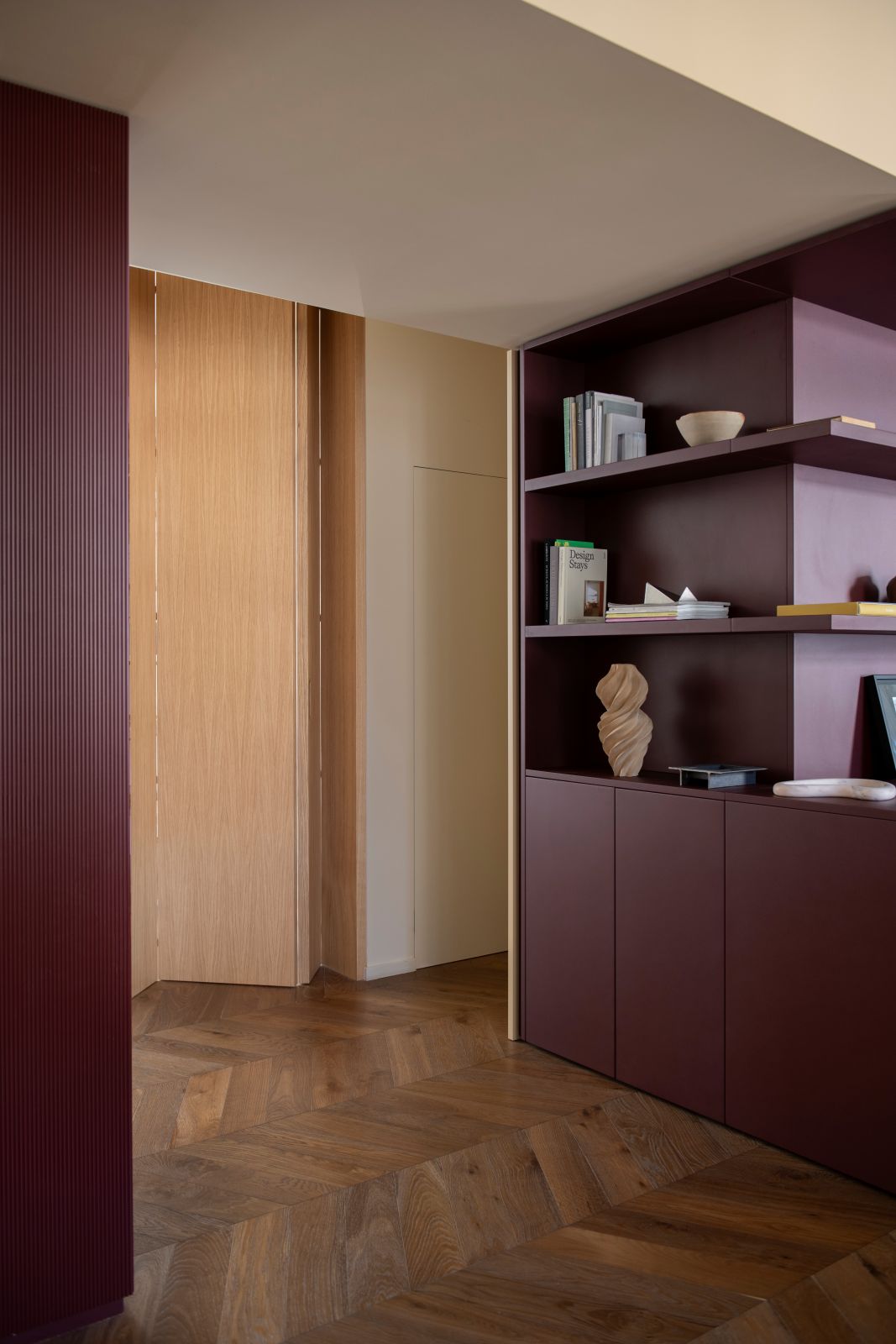
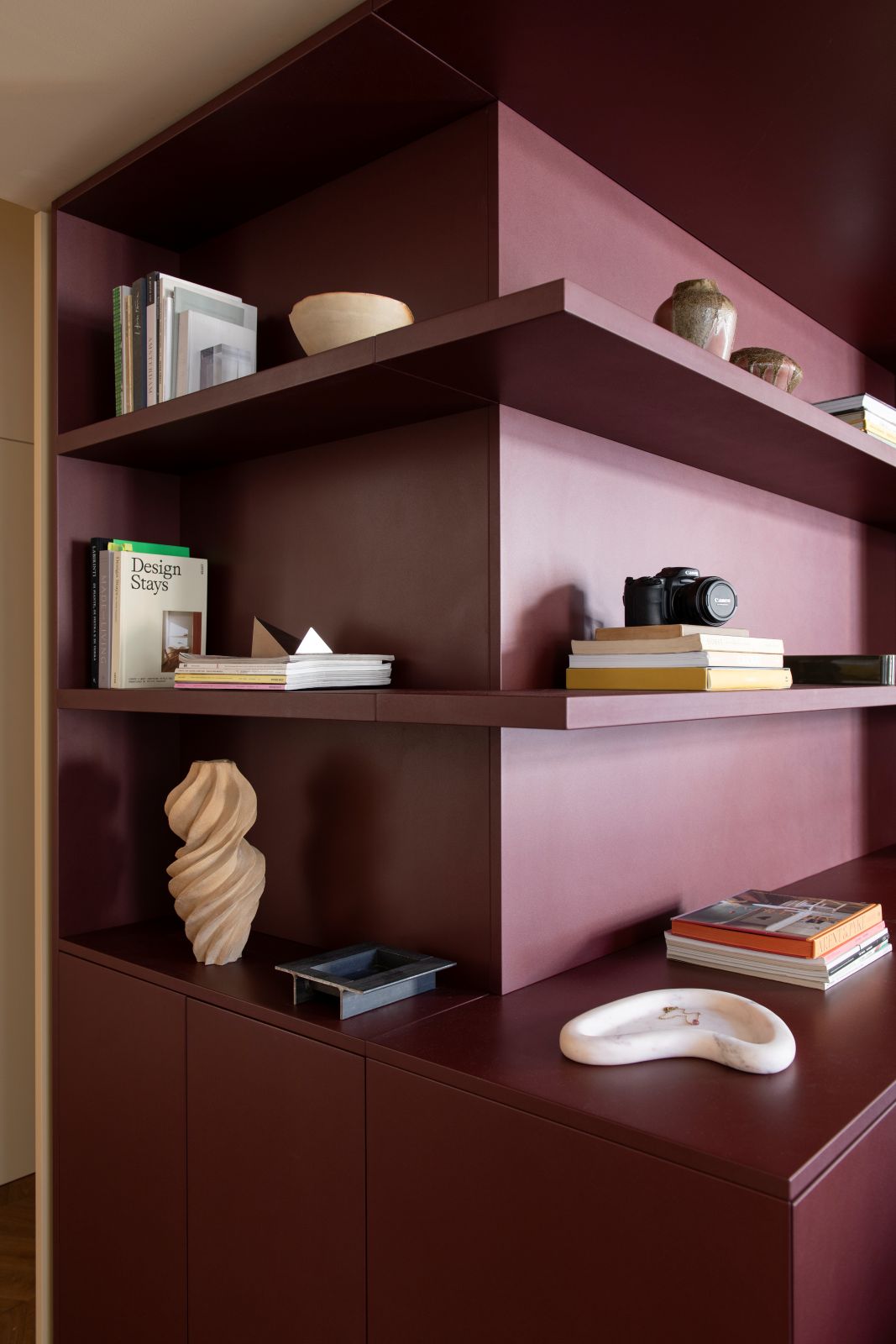
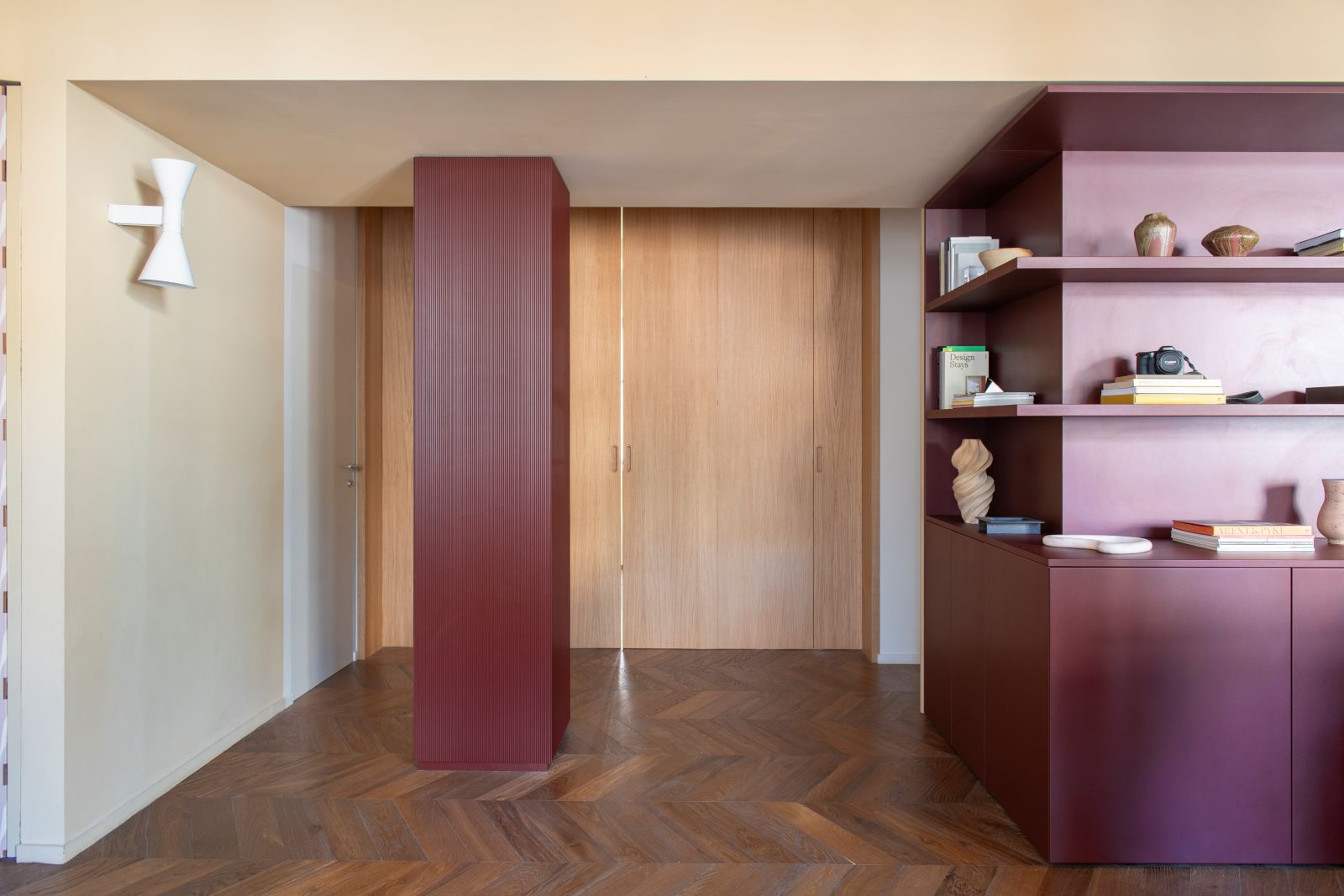
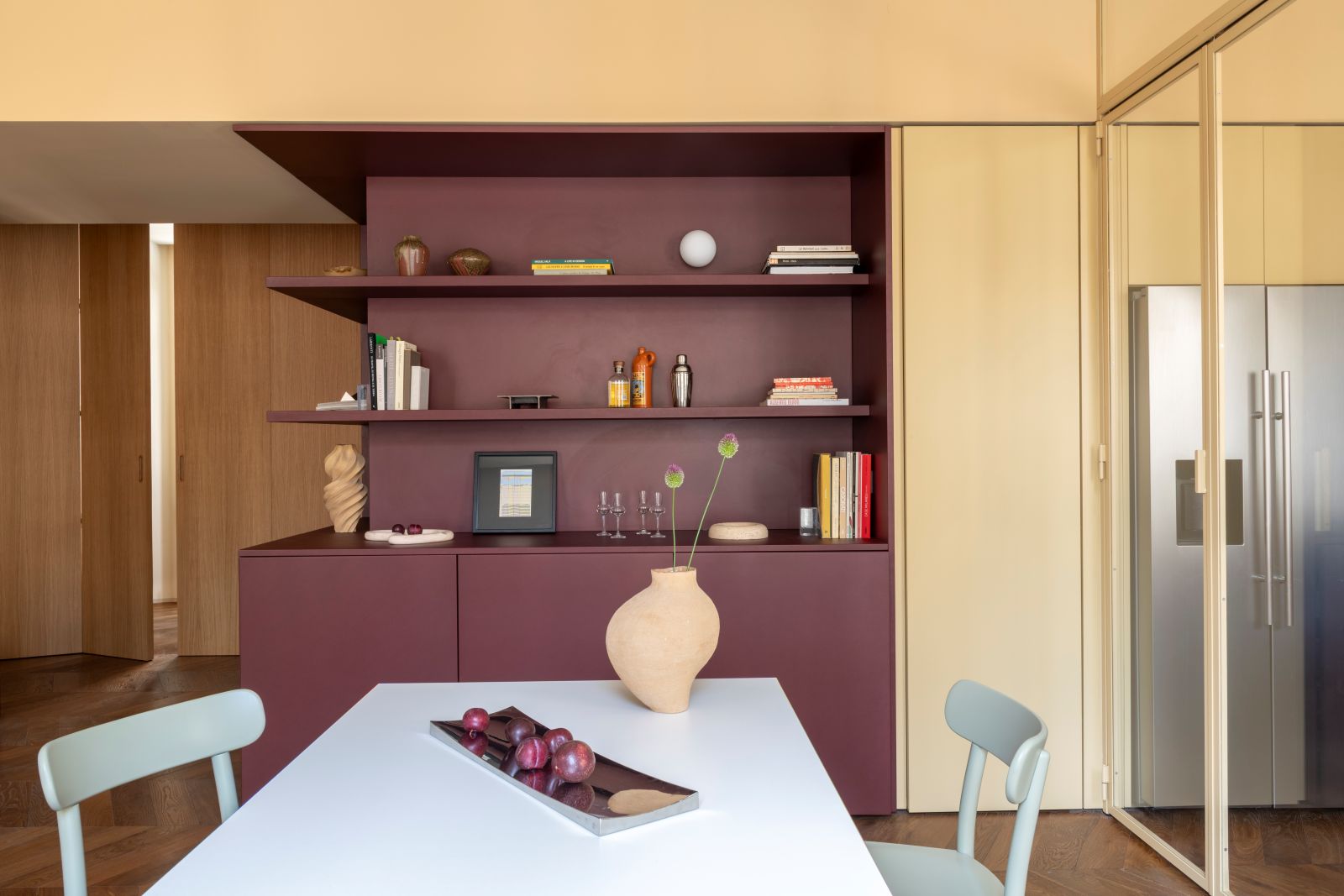
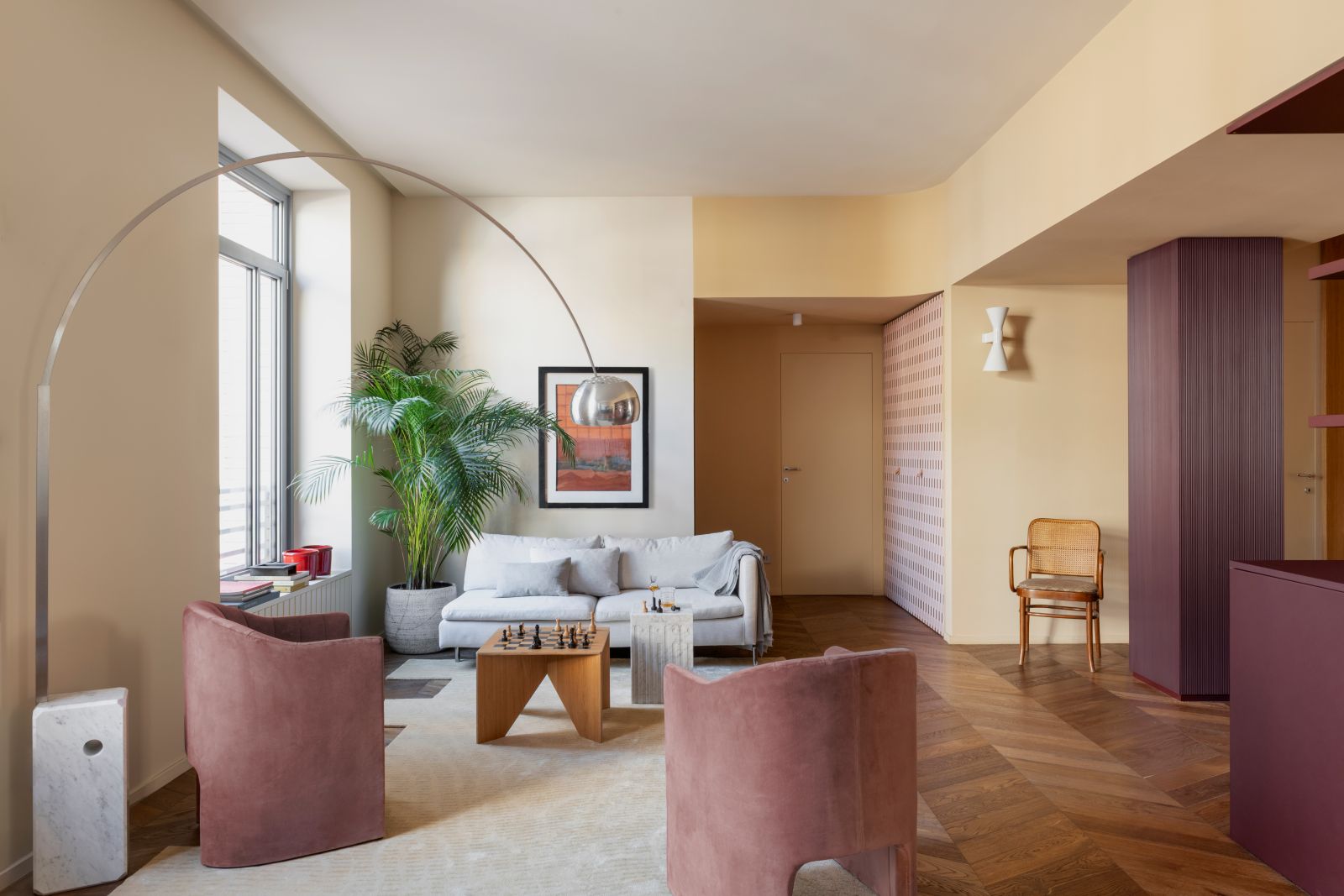
The former Milanese factory, the historical venue for Sartoria Brancato, has been transformed into a striking contemporary apartment thanks to the vision of Kick.Office studio, led by Architect Mario Abruzzese, and the bespoke solutions provided by Mo.1950. This dialogue between memory and contemporary vision allowed for the preservation of the building’s identity and original structure. Mo.1950, which has cultivated its craftsmanship hallmark for over seventy years, acted as a creative and technical partner, creating tailored furnishings that aligned with Kick.Office’s refined study of colors, surfaces, and materials. The layout preserves the traces of its past as a workshop, featuring a spacious floor plan and large windows that flood the living area with natural light.
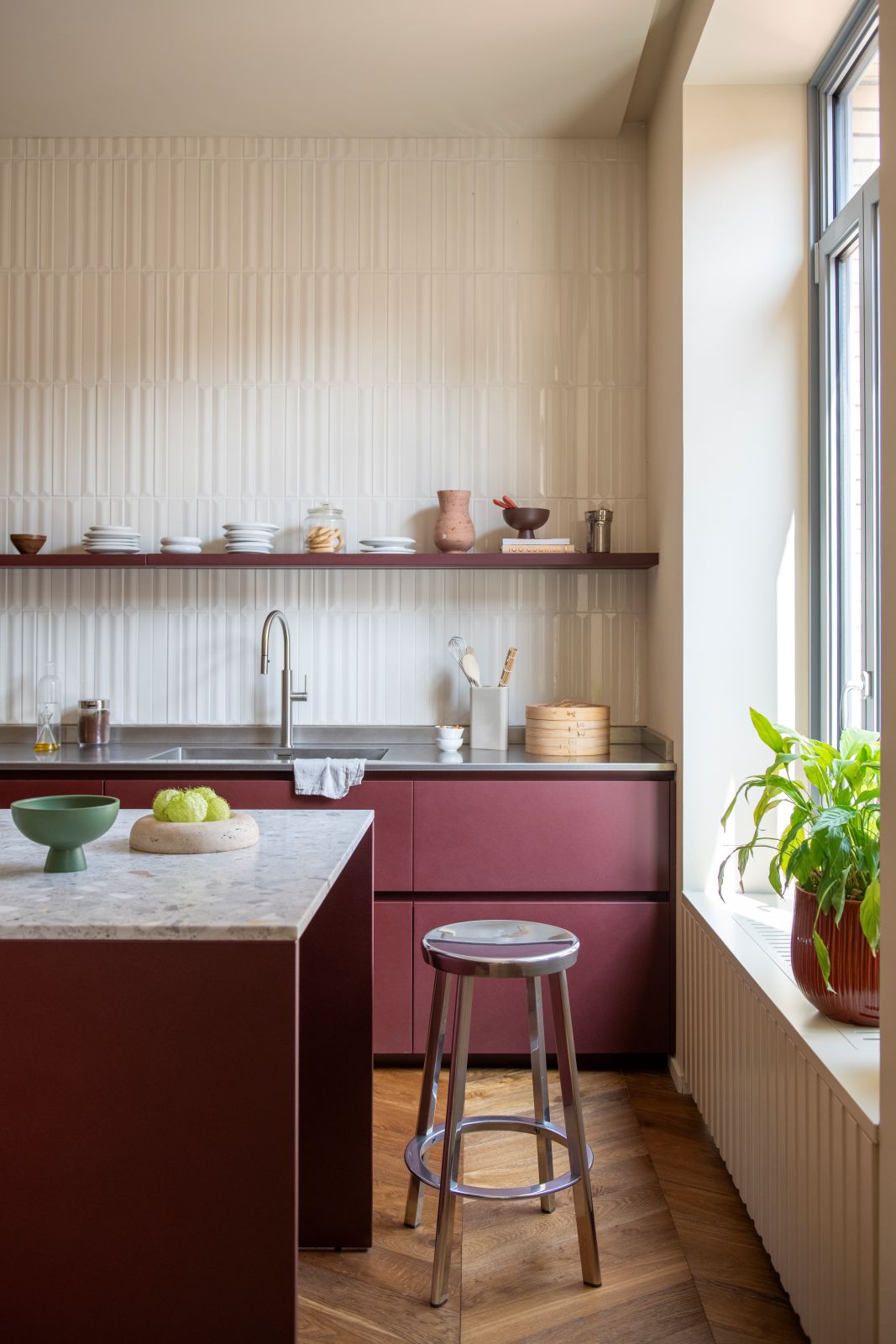
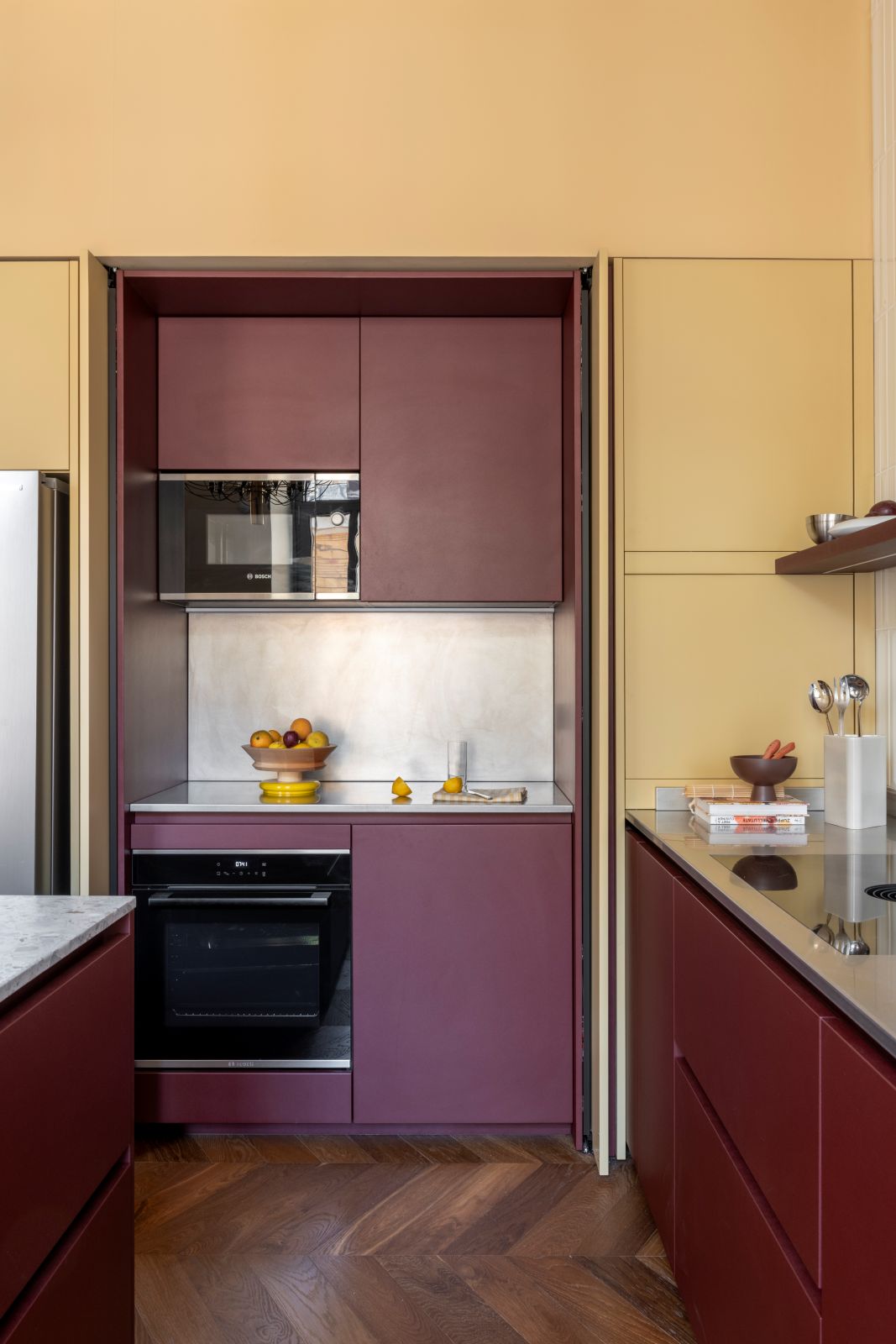
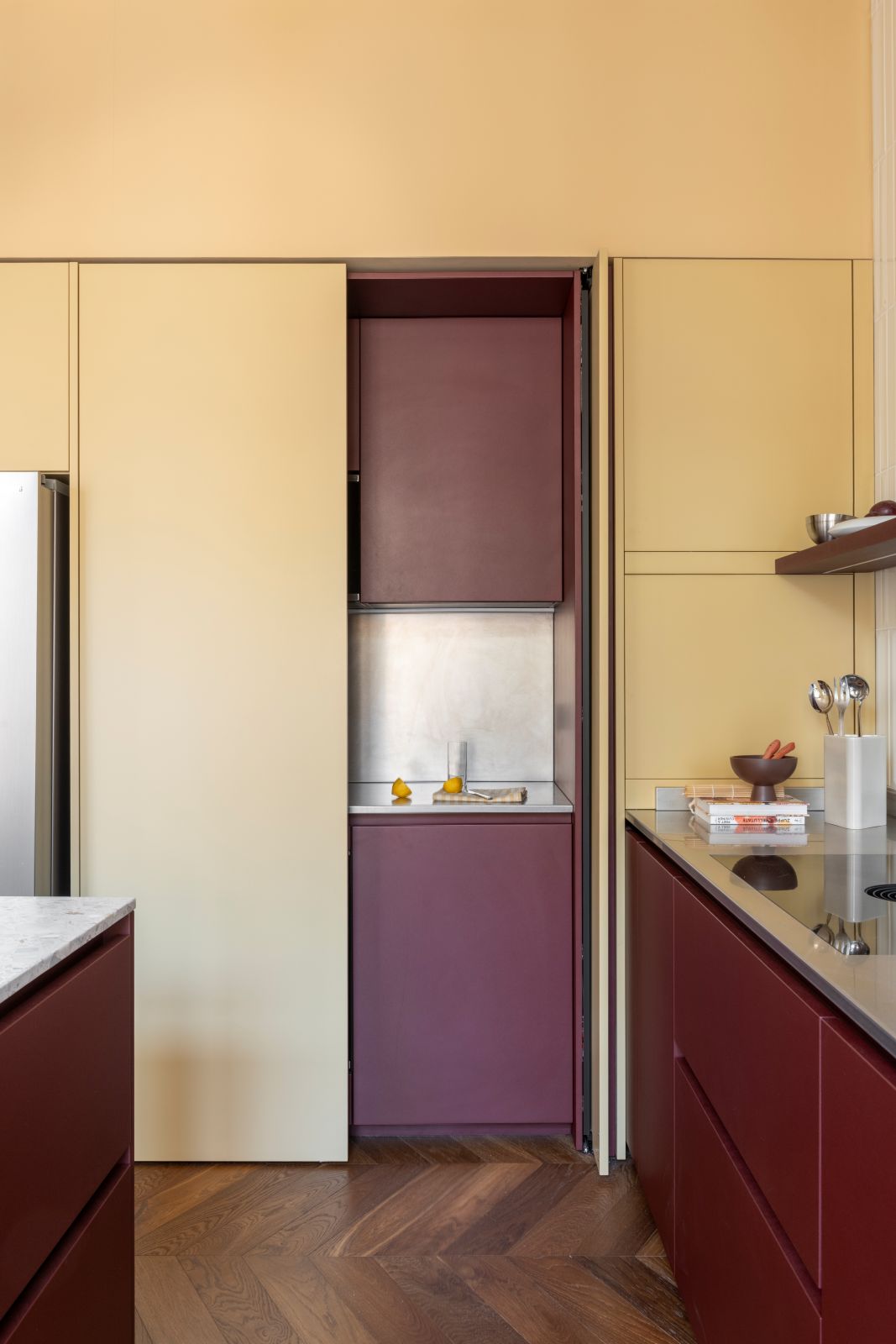
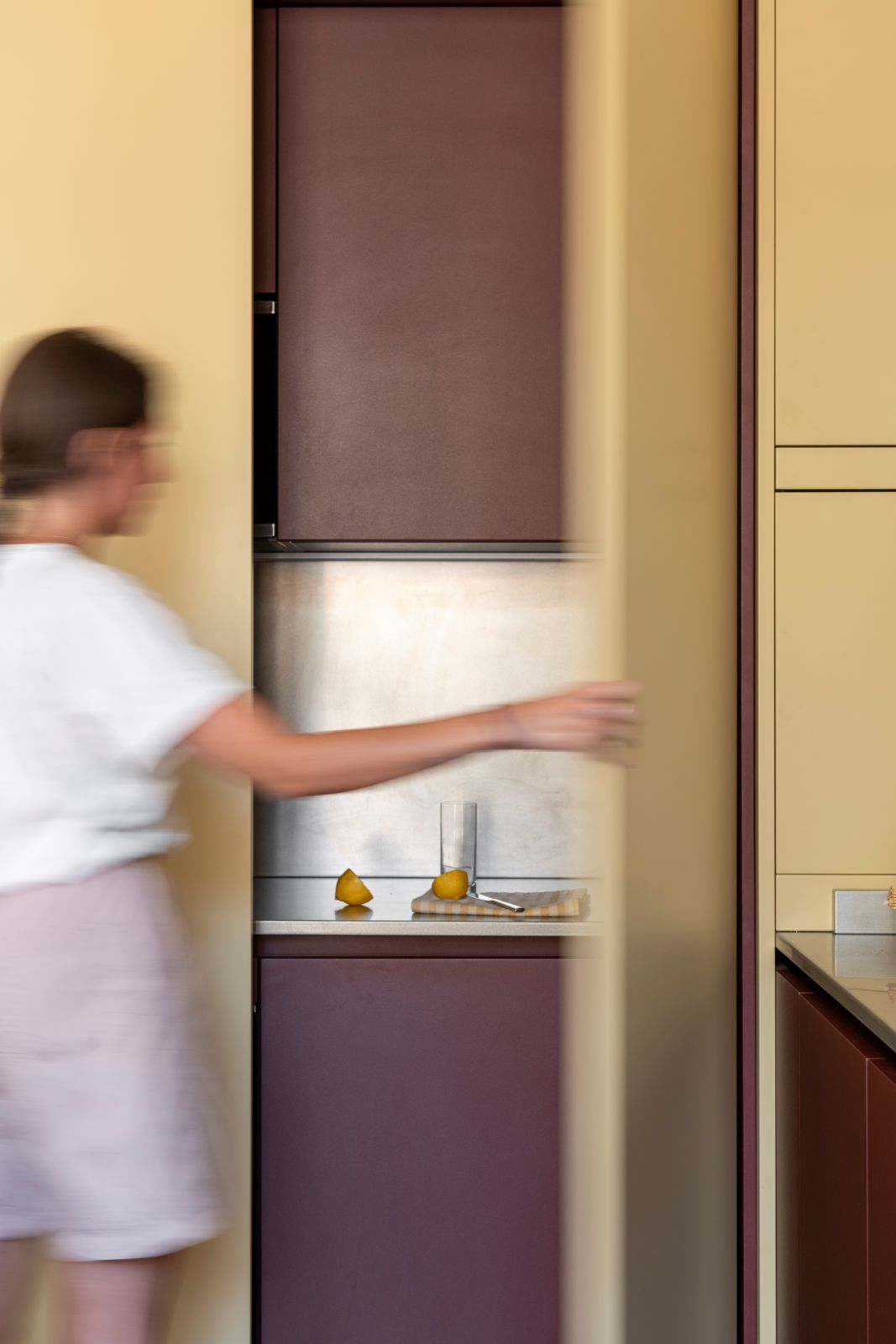
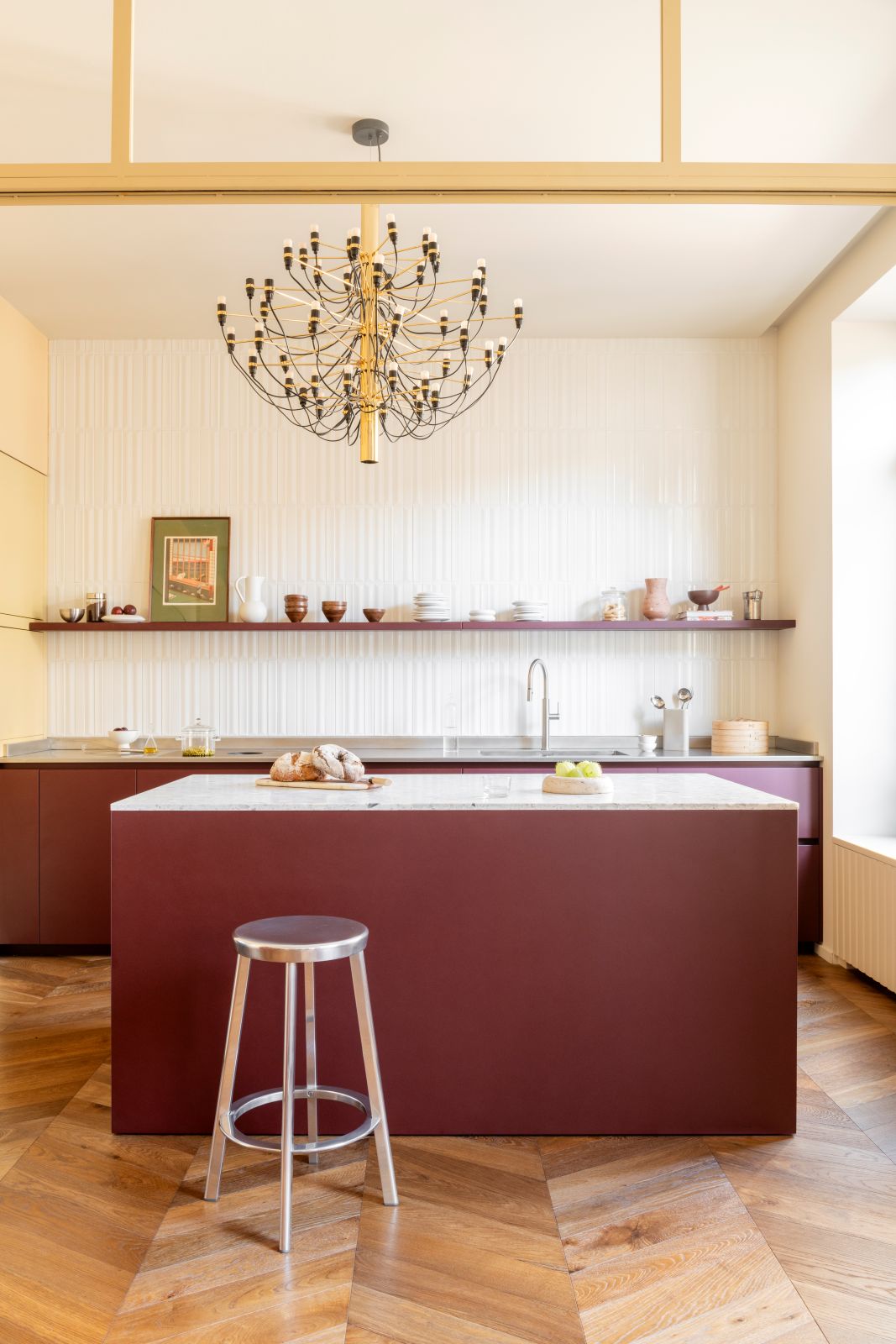
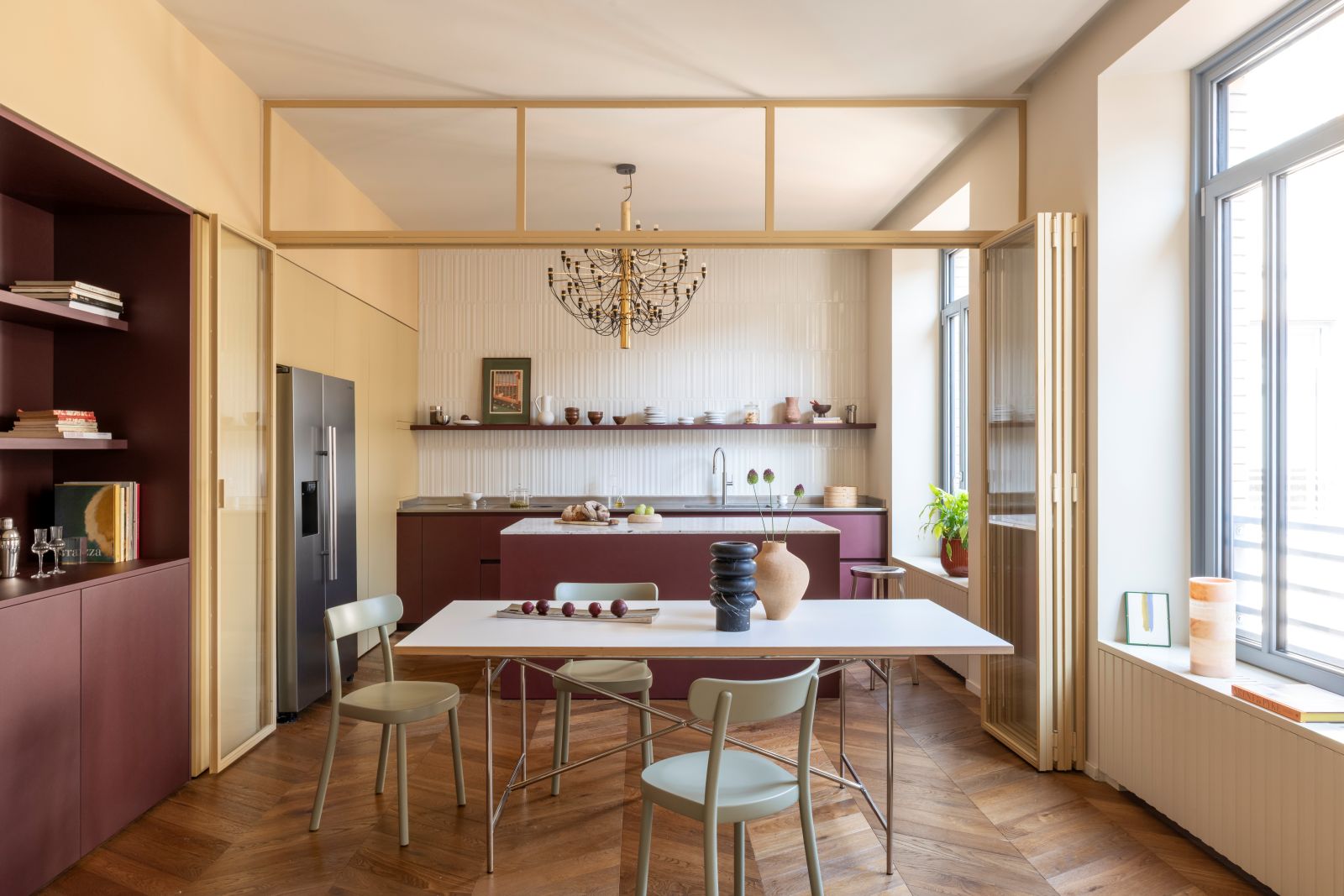
The heart of the project is the Cesar Maxima 2.2 kitchen, where a customized approach is central. The kitchen showcases bold burgundy finishes and features an imposing island with a terrazzo countertop. The work surface is hand-brushed stainless steel, set against a wall clad in glossy white tiles with geometric relief. A transparent glass partition separates the kitchen from the living room, ensuring both visual connection and flexibility.
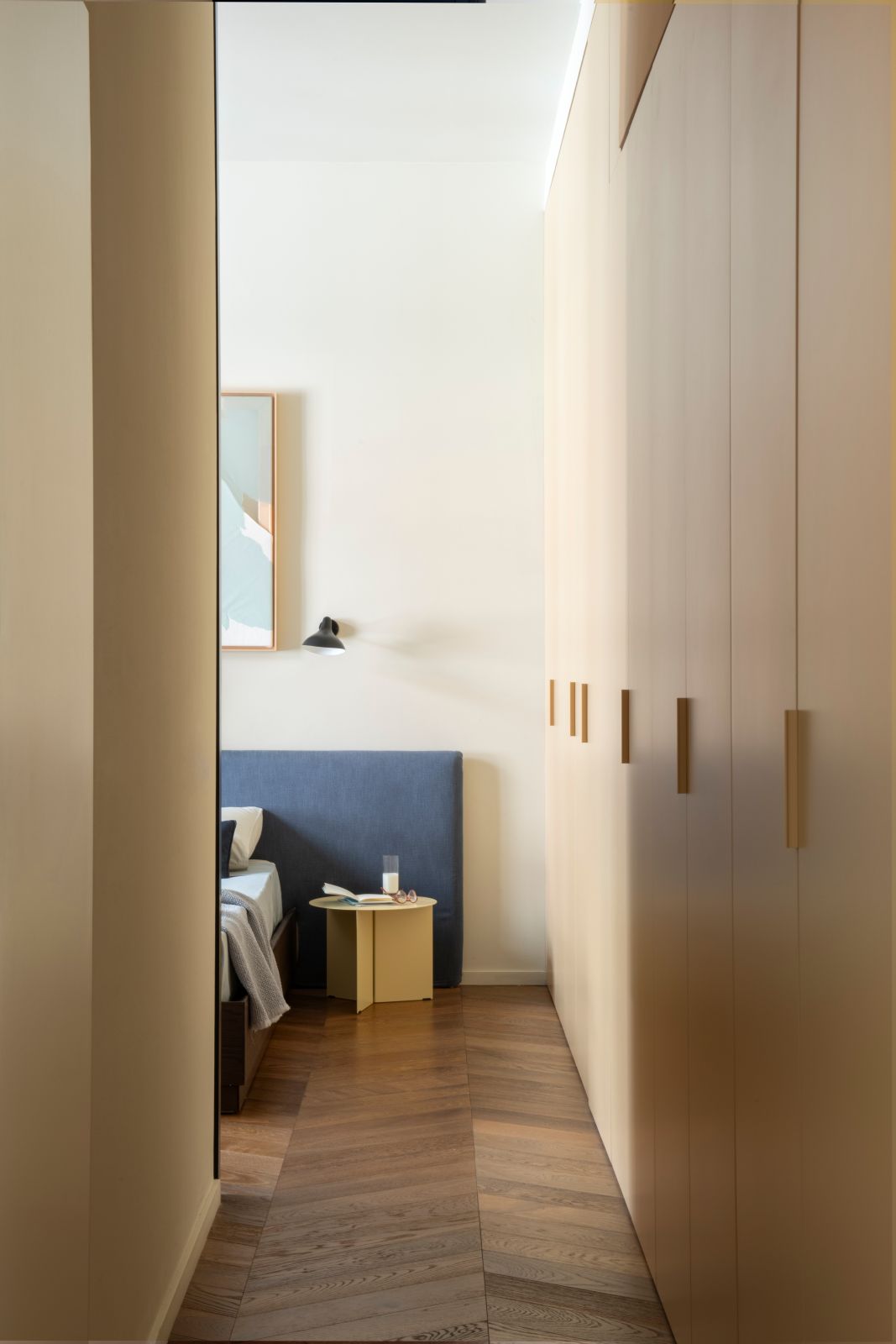
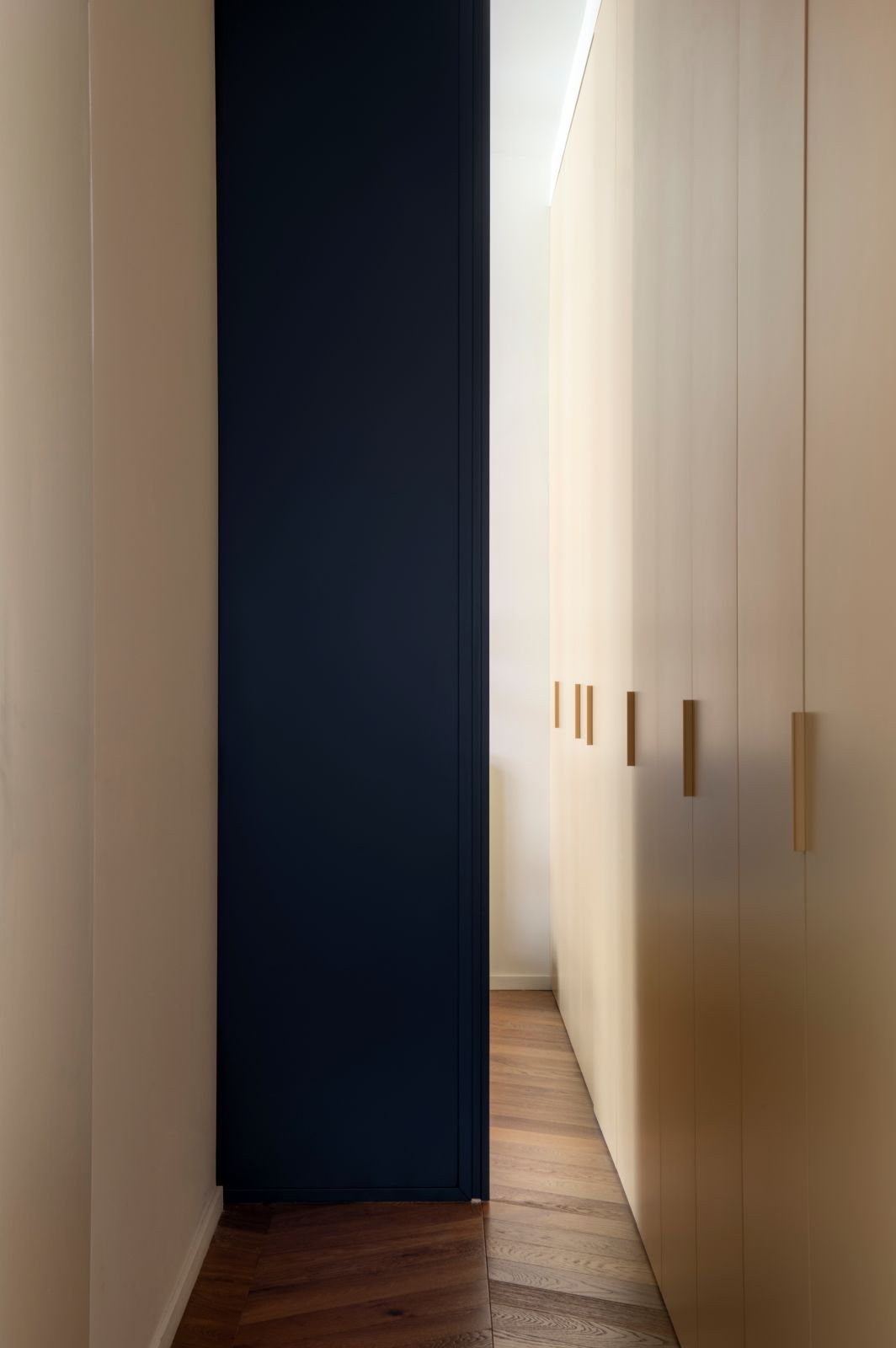
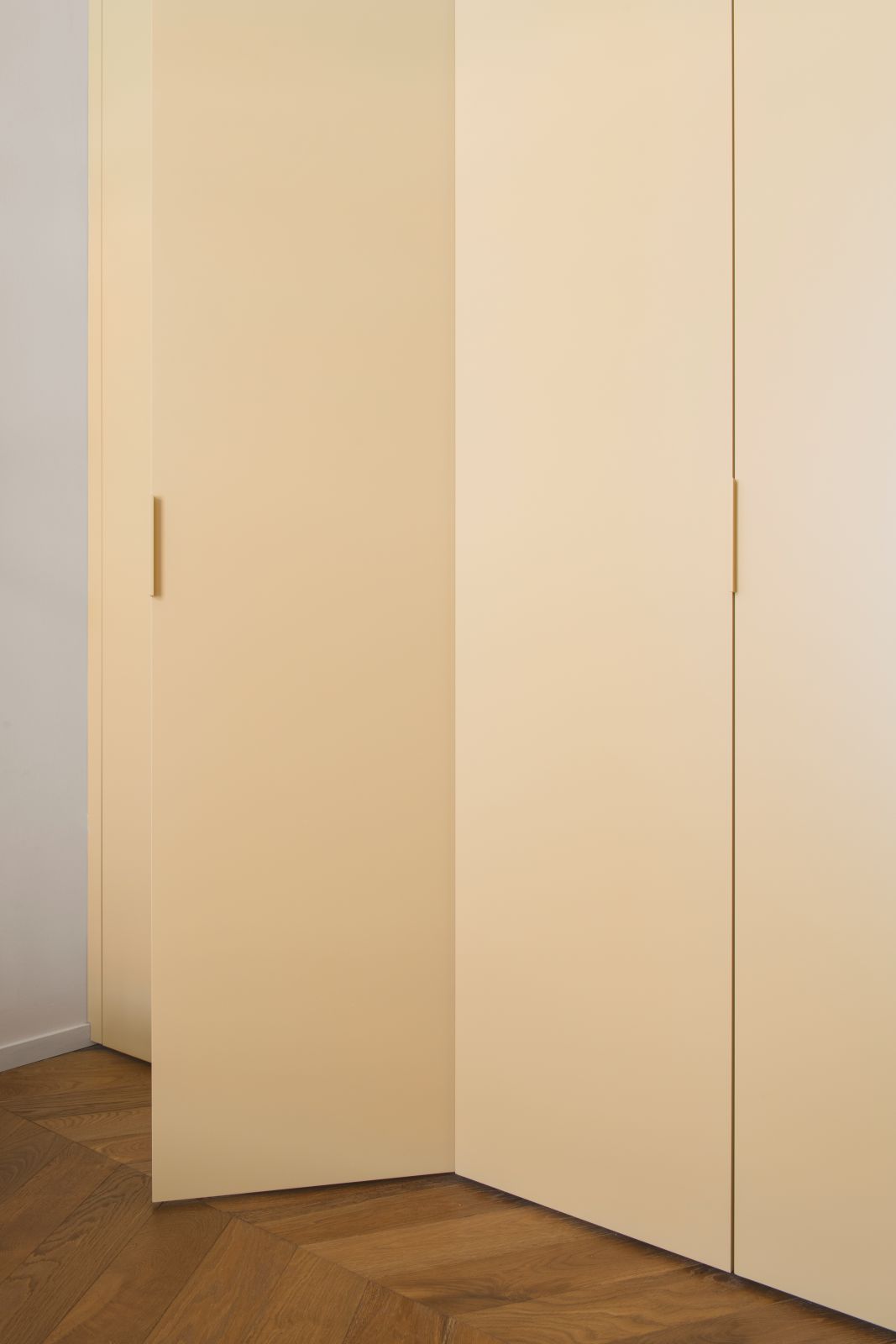
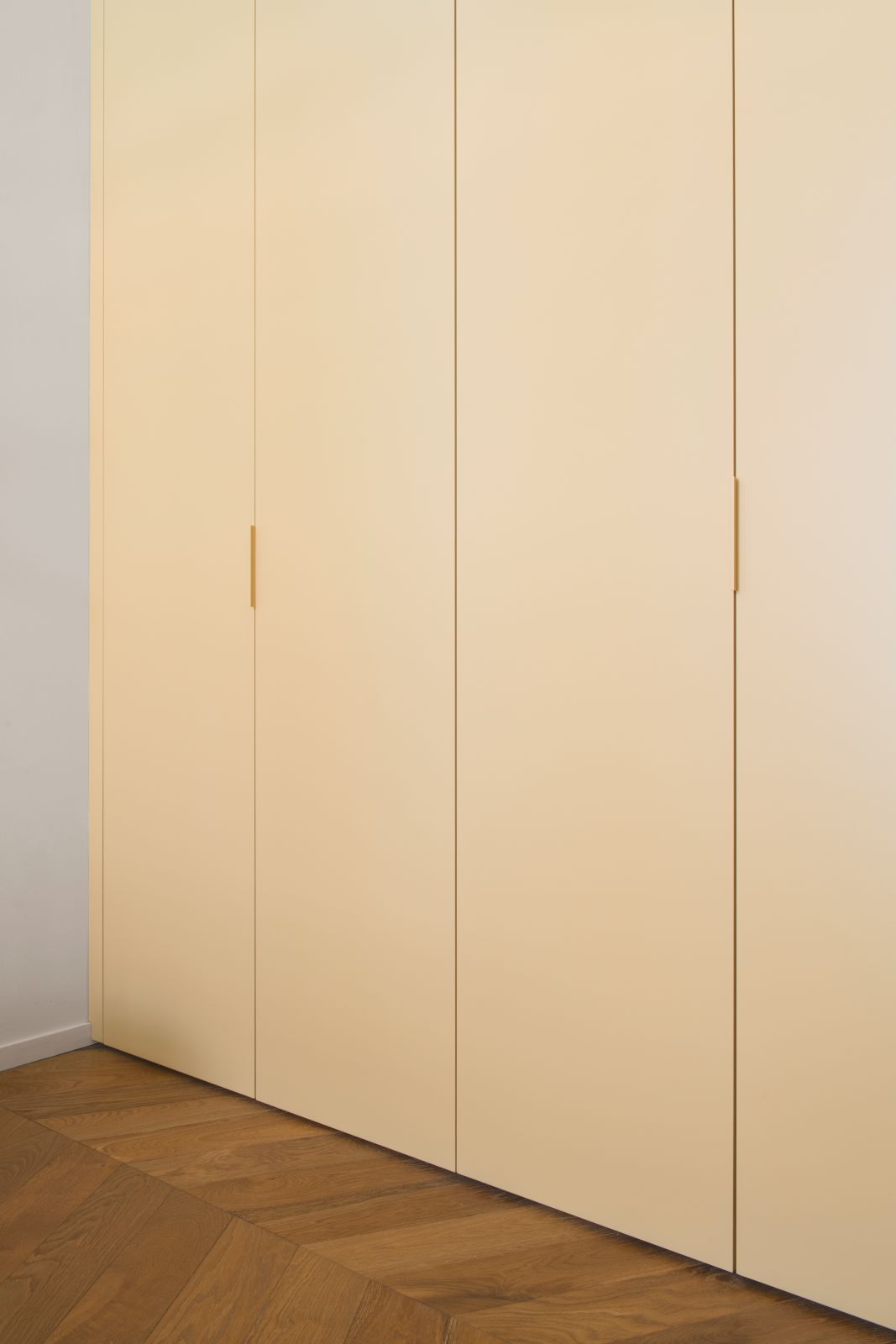
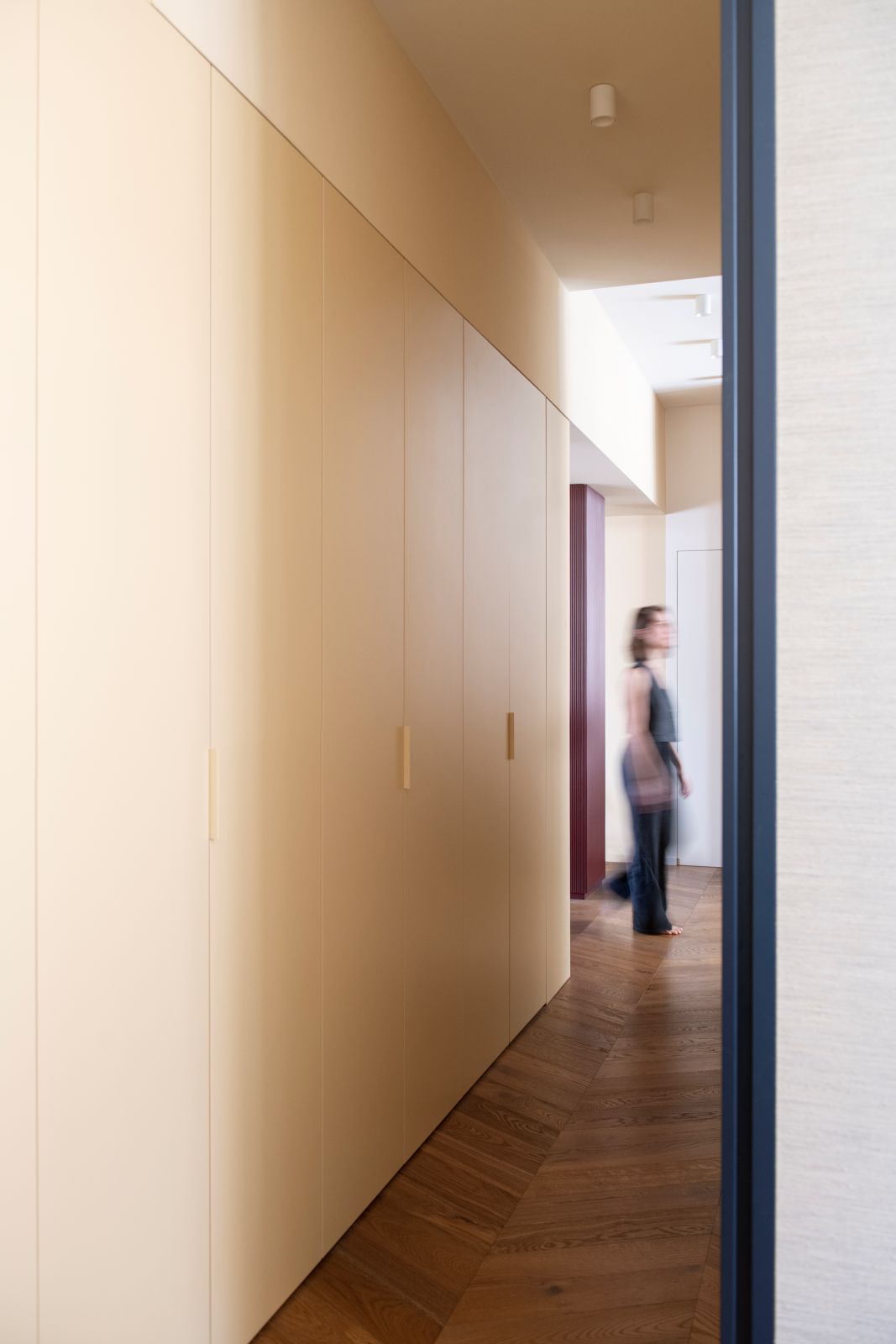
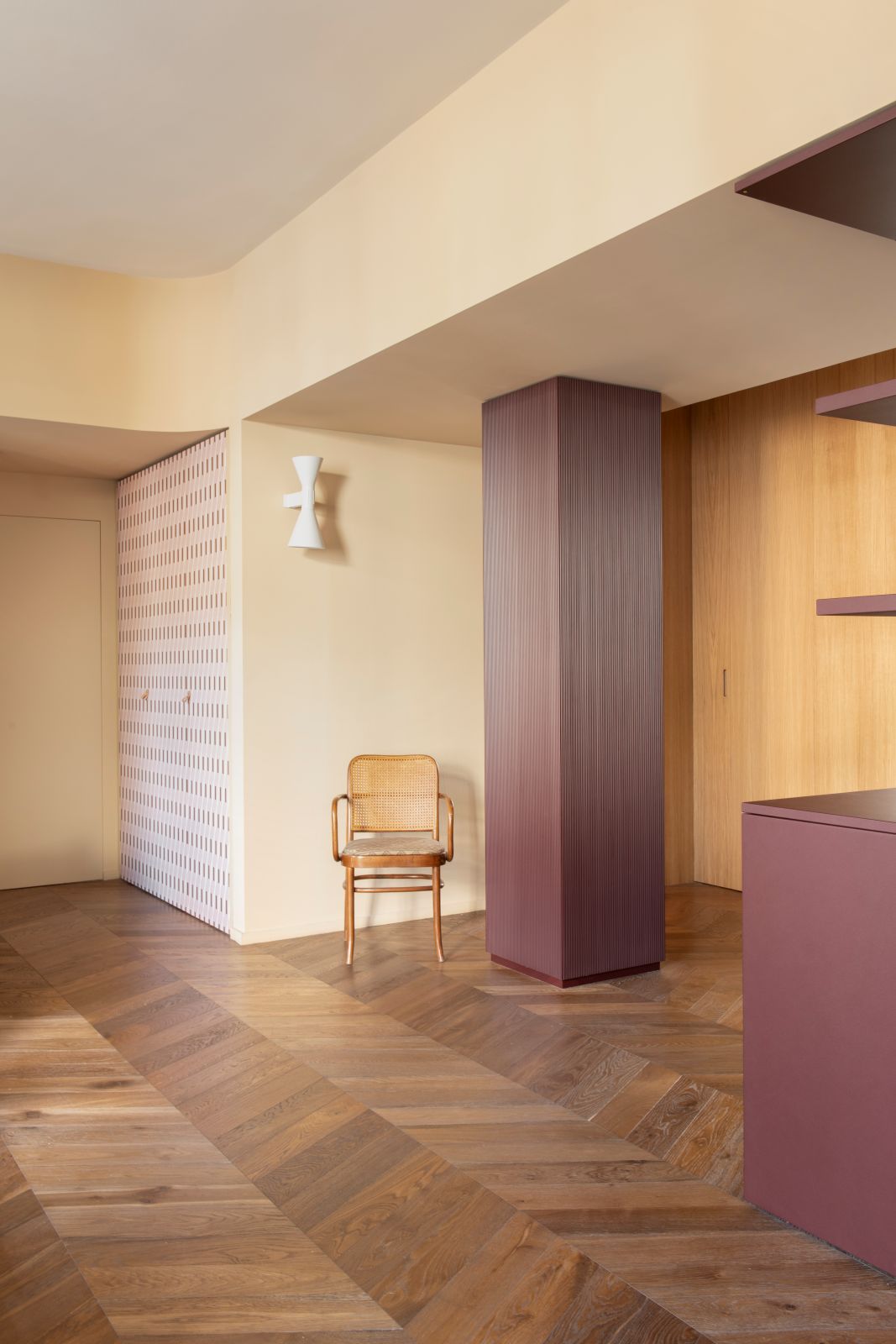
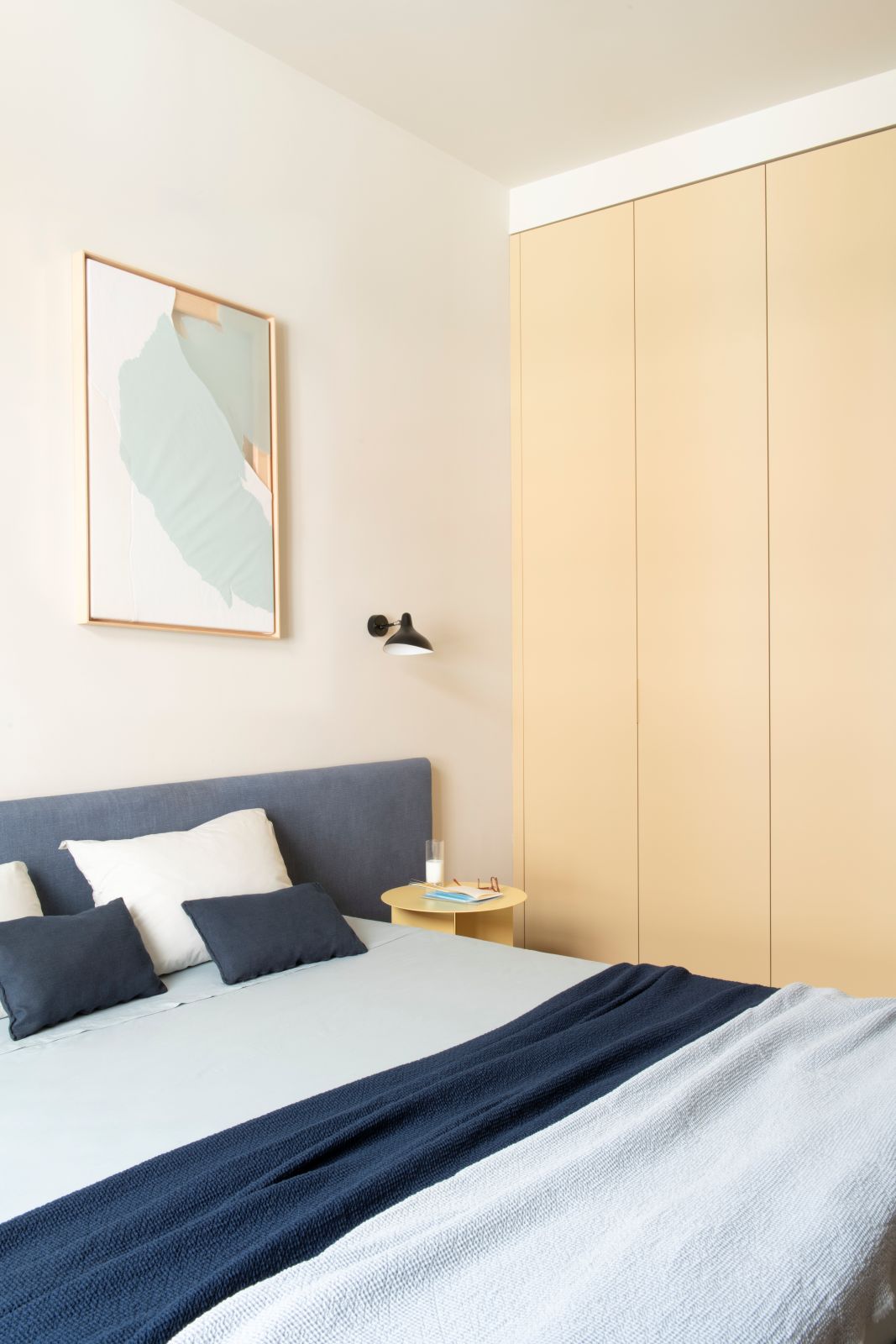
The attention to functionality and detail is carried through to the night area and service spaces. In the main suite, the Caccaro Freedhome wardrobe was customized with matte lacquer finishes and sensor-integrated lighting. At the entrance, a wardrobe was concealed behind wallpapered doors with a geometric pattern and leather handles.
Refined details extend to the bathrooms. In the private bathroom, wooden parquet flows seamlessly into navy resin that frames the bathtub area. The shower, clad in terrazzo with blue inserts, is complemented by a sophisticated freestanding mustard ceramic basin—an unexpected yet harmonious pairing. All these tailor-made solutions guarantee a functional distribution and continuity throughout the spaces. Mo.1950 reconfirms its role, interpreting the project with freedom and precision, resulting in a space that renews the artisanal legacy of the building while affirming a contemporary vision.